A resin liner cured inside the old pipe, so a cracked or root-opened drain is repaired without a trench through the driveway. We will also tell you when digging is the cheaper answer, which is not something a relining specialist tends to volunteer.
Online Now!·--:--
Relining is not the right repair everywhere. It happens to be the right repair here more often than most places, and that comes down to what is in the ground and what is sitting on top of it.
A lot of the district drains through vitrified earthenware laid in short lengths, with a joint every metre or so. Wianamatta shale swells and shrinks around it through the seasons, working those joints open, and roots follow the moisture straight in. The pipe is rarely bad along its whole length. It is a good pipe with a hundred bad joints, which is exactly what a continuous liner fixes.
The other half is what is above it. In Harris Park, North Parramatta and the older Granville streets the damaged run is usually under a concrete driveway, a paved courtyard, a mature tree, or a heritage or conservation-area frontage where digging is a planning problem before it is a plumbing one. Relining repairs the line and leaves all of that untouched.


Relining across Parramatta, quoted per metre off the camera footage so you know the number before anything starts.
A felt or fibreglass sleeve is soaked in resin, pulled or inverted into the damaged pipe, then inflated against the inside wall and left to cure. What sets is a new pipe formed inside the old one, joint free, slightly narrower and considerably smoother than what it replaced. The host pipe becomes the mould and stays in the ground.
Because there are no joints in a cured liner, there is nothing for roots to find. That is the actual mechanism behind the repair, not the marketing: you have not sealed the cracks, you have removed the joints entirely.
Two different jobs get called relining. A patch liner covers one bad joint or a short defect, typically half a metre to a couple of metres, and is the right call when the camera shows a single failure in an otherwise sound line. A full-length liner runs pit to pit and is what you want when the whole run is the same age and the same condition.
Paying for a full liner when a patch would do is the most common way to overspend on this. Paying for three patches in eighteen months when the run needed lining is the second. The footage is what decides it, which is why we will not quote either one over the phone.
A liner needs a host pipe to form against. If a section has properly collapsed, if it has deformed badly out of round, or if it has dropped enough that the fall is gone, there is nothing sound to line and it has to come up. Back-fall in particular is worth understanding: relining a pipe that runs uphill gives you a smooth pipe that still will not drain.
There are also runs where the damage sits under an open lawn with easy access and no services in the way. Digging that up and replacing it can be cheaper than lining it. We would rather tell you that than sell you the more expensive repair, and it is the main reason we quote off footage rather than off a phone description.
When a liner passes an inlet, from a downpipe, a gully or a branch off the house, it seals over it. That opening then has to be reinstated, usually with a small robotic cutter working from inside the pipe. Every junction on the run is a separate step and a separate cost.
It is worth asking any quote how many junctions are included, because a cheap per-metre rate with junction reinstatement charged on top can land well above a higher rate that includes them. Ours are itemised.
Cured liners are typically rated for a design life of around fifty years, and you will see warranties quoted in that range across the industry. Treat the number as a materials rating rather than a promise, and read who is standing behind it: a fifty year warranty from an operator who has been trading three years is a shorter warranty than it appears.
What matters more in practice is whether the install was right. Correct liner thickness for the diameter, a proper cure, junctions cut cleanly and squarely. Footage after the cure is the only way you can check any of that, and you should insist on it from whoever does the work.
A root intrusion is a symptom of a joint, not of a tree. Cutting the roots out clears the line and buys you a season or two, then the same joint leaks the same moisture and the same roots follow it back. Around here the usual culprits are camphor laurels, liquidambars and the older street plantings, and their root systems reach a lot further than the canopy suggests.
That is the decision point most Parramatta owners actually face: keep paying to cut roots every eighteen months, or line the run once and stop feeding them a way in. Relining also means the tree stays, which matters if it is protected or simply the reason you bought the place.
In the CBD and Westmead towers the line under your floor is frequently common property, and lining it is the owners corporation's decision rather than yours. On a freestanding house the responsibility runs to the boundary, and past that it is Sydney Water's.
Where the defect sits close to that line, the camera footage settles who pays before anyone commits to a repair. We provide the recording and a written report for strata, insurers or a conveyancer.
If you are about to buy a pre-war house in Harris Park, Granville or North Parramatta, the drains are worth a camera before you exchange rather than after. Earthenware of that age is not a defect in itself, but knowing whether you are inheriting a sound line or a full relining job is worth a great deal more than the inspection costs.
We are happy to do that as a standalone job with footage and a written report, with no expectation that the repair follows.

Relining is priced per metre, and anyone quoting it without seeing footage is guessing. These are 2026 Sydney ranges rather than a quote from us, published so you can sanity-check the quotes you are comparing, ours included.
Down the line first. Nothing gets quoted until we have both seen what is actually wrong.
One bad joint or a short section in an otherwise sound run. Often all that is needed.
Pit to pit. The range moves on diameter, access and how much of the run needs it.
Each inlet the liner passes has to be cut back open. Itemised, never charged as a surprise.
Where relining is not the right repair. Sometimes this is the cheaper number and we will say so.
Diameter, access and the number of junctions are what move the figure, in that order. A short run under an open lawn with one inlet is a very different job to twenty metres under a driveway with four. Relining is also one line on a longer list, and the same crews work as general and emergency plumbers servicing Parramatta, so whatever the camera turns up does not need a second trade booked.

How often it blocks, whether roots have been cut before, and what is sitting above the line. That tells us whether we are booking a camera or a clear first.

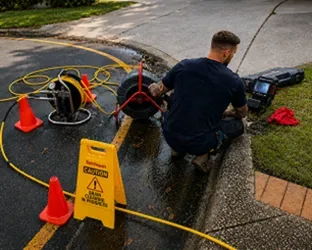
The line is cleared enough to get a camera through, then recorded end to end. We measure the defect and its distance from the access point so the quote is metres, not guesswork.

You get the footage and the options: patch, full liner, or dig. Including which one we would choose and why, and the honest answer if digging is cheaper.

Relined at the price you approved, junctions reinstated, then filmed again after the cure so you can see the finished pipe rather than take our word for it.
Send us the footage and the quote. We will tell you whether the scope looks right, whether a patch would do instead of a full liner, and what the junctions should be costing.
Call 1300 381 569
What Parramatta owners ask before committing to a relining quote.
Ask us yours
Full relining runs roughly $500 to $900 per metre depending on diameter and access, a patch liner for a single defect is usually $900 to $2,000, and junction reinstatement is $350 to $700 for each inlet the liner passes. The camera inspection that decides which of those you need is $250 to $450. Nobody can price it honestly without footage.
For the common failure here, a sound pipe with open or root-damaged joints, it is arguably better, because the cured liner has no joints at all. Where it is not as good is a pipe that has collapsed, deformed badly or lost its fall. There is nothing for a liner to form against, and those need excavation.
Cured liners are generally rated for a design life of around fifty years, and warranties in that range are common across the industry. Treat it as a materials rating and check who is standing behind it. What actually decides longevity is install quality: correct liner thickness, a proper cure and clean junction cuts.
Usually not. The liner goes in through an existing access point such as an inspection opening or a pit, which is the whole advantage on a driveway, a paved courtyard or a heritage frontage. Occasionally we need one small access excavation where there is no usable entry point, and you would know that before starting.
In the lined section, yes, because there are no joints left for roots to enter. Cutting roots without lining clears the line but leaves the joint, so the same roots follow the same moisture back within a season or two. That repeating cycle is the reason most Parramatta owners end up relining.
That is one of the situations relining exists for. The work happens inside the pipe, so the root zone is not excavated and the tree stays. It is also why relining comes up so often in the conservation areas around here, where digging a frontage is a planning question before it is a plumbing one.
Past the property boundary the line is Sydney Water's responsibility rather than yours. Where a defect sits near that line, the camera footage establishes which side it is on before anyone commits to a repair, and we give you the recording and a written report to support it.
Send your details through and a licensed plumber rings you back. A drain that keeps blocking, roots you have already paid to cut, or a relining quote you want a second opinion on, you see the footage and the figure before anything starts.
Online Now!·--:--