Roots do not break into a sound pipe. They find a joint that has opened or a length that has cracked, follow the moisture and nutrients leaking out of it, and then grow inside until the line chokes. That is why clearing them only buys time, and why the question that actually matters is what state the pipe is in. Around Parramatta, with old clay sewer in the ground and reactive clay around it, the honest answer is often "not great".
Here is how to tell whether roots are your problem, what a proper fix looks like, and what City of Parramatta and Sydney Water will and will not let you do about the tree. If a drain is already overflowing, get the blocked drain plumbers moving first and read the rest while you wait.
A licensed plumber cuts or jets the roots out, then puts a camera through the line to find the crack or open joint that let them in. Clearing alone means they grow back, so the lasting fix is to repair, reline or replace that section. Leave the tree alone until you have checked the council rules: in the City of Parramatta area many trees need a permit, but four problem species within 5 metres of a sewer do not.
- Check the signs: slow, recurring, gurgling, the gully filling
- If it is overflowing, stop using water
- Get the roots cut or jetted out by a licensed plumber
- Have a camera run through the line
- Fix the damaged section, not just the roots
- Check the tree rules before anyone touches the tree
On this page
1. Check the signs before you blame the tree
Roots give a blocked drain a particular pattern. The drain does not block once and stay clear; it slows, clears, then slows again over weeks or months, usually at the same point in the line. You hear gurgling from the toilet or a floor waste when the washing machine empties, and the overflow gully in the yard fills or weeps when nothing else in the house seems wrong.
A single sudden blockage after someone flushed wipes is more likely to be the wipes. Sydney Water's own advice is that roots finding their way into pipes are the most common cause of blockages, but that blockages normally contain a mix of roots, wipes and fat. That mix is the point: roots in the pipe act like a net, and everything else catches on them.
Look at what is growing near where the line runs, too. A big tree within a few metres of the path between the house and the street, a row of street trees along the nature strip, or a line of shrubs down the side fence are all worth noting before the plumber arrives. The toilet gurgling guide covers the noise side of this in more detail.
2. If it is overflowing, stop the water and check the gully
If sewage is already coming out of the gully or a floor waste, stop using water in the house: no flushing, no showers, no washing machine. Everything you send down a root-choked line comes straight back out at the lowest opening.
Then make one quick check before you ring anyone. Sydney Water treats an overflow from a maintenance hole on public land, neighbours with the same problem, widespread flooding, or an overflow that keeps going while you are not using any water as signs the blockage is in its main. If any of those fit, ring Sydney Water on 13 20 90, which runs 24 hours. If none do, the blockage is almost certainly in your own line. Our guide to whose sewer pipe it is walks through that test step by step.
3. Get the line cleared by a licensed plumber
Clearing a sewer drain is licensed work in NSW. The state's definition of draining work covers the maintenance, repair, flushing or cleansing of any sanitary drain connected to a sewer, and doing it unlicensed carries fines of up to $22,000 for an individual and $110,000 for a company. That is not us protecting our patch: a hired electric eel in the wrong hands can crack an old clay joint or get stuck in the line, and then the job is a dig.
A plumber will work from the gully or an inspection opening and use one of two tools. A cutting head on an electric eel chews through the root mass. A high-pressure jetter cuts roots and also flushes out the fat and debris caught in them. Which one suits depends on the pipe and how heavy the growth is, and a good plumber will tell you why they chose it. We put our licence number, 368473C, on every quote.
Roots blocking the drain again?
A licensed Parramatta plumber can clear the line and camera it in the same visit, 24/7.
4. Put a camera through it before you decide anything
Clearing the roots tells you the pipe is open today. It does not tell you why the roots got in, and that is the question that decides what you spend. A drain camera run from the gully or an inspection opening shows whether you have one open joint, a cracked length, several failed joints, or a pipe that has dropped out of line.
Ask for the footage and a written report. It is useful twice over in Parramatta. City of Parramatta says a sewer diagram and a comprehensive report from a licensed plumber will speed up its assessment if you later apply to remove roots or a tree. And if the camera finds the problem is at or past the junction on Sydney Water's main, the footage is what starts that conversation instead of an argument.
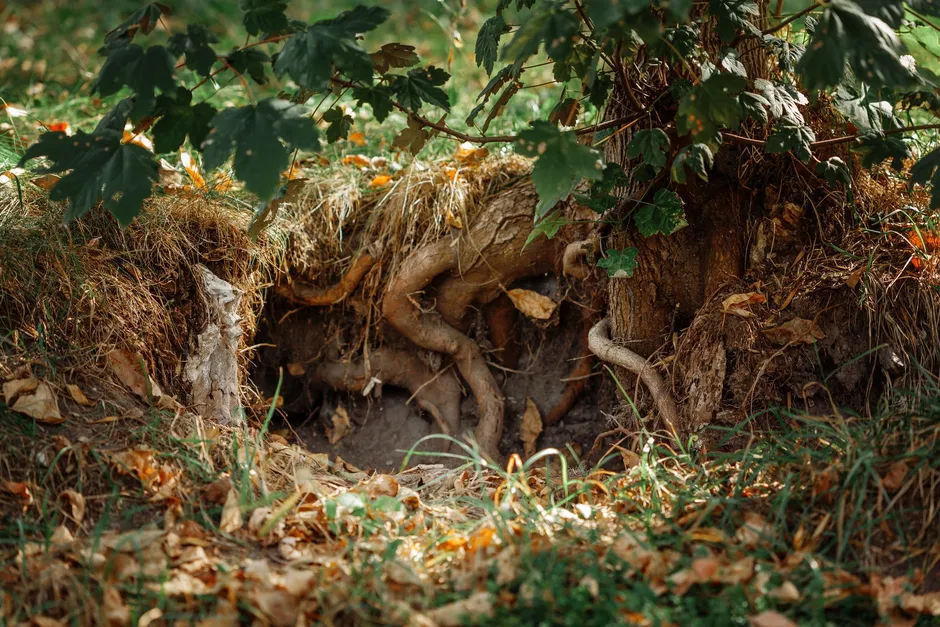
5. Fix the pipe, not just the roots
Every lasting fix for roots is really a fix for the pipe. City of Parramatta's own list of what solves a root blockage is root pruning, replacing old dilapidated pipes, concrete encasing, or root barriers, and only if the damage is serious and recurring does it support removing the tree.
In practice the options run from cheapest to most permanent:
- Clear it on a schedule. If the pipe is sound apart from one weak joint and the tree is staying, a regular clean before the roots get heavy can be the sensible answer. Sydney Water itself says a plumber can set up a regular maintenance plan where existing trees are a problem. It is a cost that never ends, so do the sums.
- Reline the damaged section. A resin liner cured inside the old pipe gives you a jointless pipe roots cannot get back into, without digging up the garden, the driveway or the tree's root zone. On a heritage-listed block or under a big tree you want to keep, that last part matters. Our pipe relining page explains when it works and when it does not.
- Dig and replace. Where the pipe has collapsed or dropped too far out of line to reline, the section comes out and goes back in modern PVC with sealed joints. Council's list also includes concrete encasing and root barriers where a replaced line runs close to a tree.
One depth rule is worth knowing before anyone digs near the street. If the fault is at a point of connection more than 2.5 metres deep, Sydney Water says it takes over the repair, and it will not reimburse digging that was done without its approval.
6. Deal with the tree the legal way
Before anyone prunes, poisons or removes the tree, check three things: which council you are in, how tall the tree is and what species it is, and whether the block is heritage-listed. Parramatta owners get caught out here because the answer changes with each one.
In the City of Parramatta area, you need Council's permission to prune or remove any tree 5 metres or taller, any tree 3 metres or taller that was intentionally planted, and any tree that forms part of a heritage item or sits within a Heritage Conservation Area. Heritage sites use a separate Tree Works Approval form, and Council points owners to the NSW ePlanning spatial viewer to check whether their property is listed. For roots in a pipe specifically, Council says you apply for a Tree Permit to remove the roots around the pipe or, if necessary, the whole tree.
The four-species exception. City of Parramatta lets you prune or remove a Poplar, a Willow, a Camphor Laurel or a Liquidambar without consent where its trunk is within 5 metres of any sewer. If one of those is sitting over your line, that is the easiest tree problem you will ever have. Measure from the trunk, and use the sewerage service diagram rather than a guess about where the pipe runs.
In Cumberland City Council, which covers Merrylands and parts of Granville, Westmead, Wentworthville, Toongabbie and Mays Hill, the rules are different. Cumberland asks for a Tree Works Application before pruning or removing many trees over 3.6 metres high. A tree that would be exempt on one side of the council boundary can need approval on the other, so check which council your rates notice comes from before anyone starts cutting.
Street trees belong to Council. If the roots in your line are coming from a tree on the nature strip, do not cut it or its roots yourself. Council says street trees remain its responsibility and that any roots uncovered on the nature strip must not be damaged. Report it to Council and let its arborists decide.
7. Why so many Parramatta drains fill with roots
City of Parramatta says it plainly: tree roots do not enter sound pipe joints. Root problems here are pipe problems, and a few very local things make the pipes more likely to fail.
Old clay sewer. Much of the older housing in Harris Park, North Parramatta and Granville still drains through vitrified clay pipe laid in short lengths. Every length meets the next at a joint, and every joint is a seam that can open. Newer lines in PVC have far fewer joints, and sealed ones.
Ground that moves. Parramatta sits on the Wianamatta shale of the Cumberland Plain, which weathers into a clay soil recognised as reactive, with an appreciable shrink-swell capacity. It swells in wet spells and shrinks back in dry ones, and over years that movement works rigid old joints apart. The gap does not need to be big. A hairline opening that leaks moisture into the soil is enough for a fine root to find, and once inside it thickens.
Trees Council has already named. City of Parramatta singles out Poplar, Willow, Camphor Laurel and Liquidambar by allowing owners to remove them without consent when they sit within 5 metres of a sewer. Put an old clay joint, moving clay and one of those four together and you have the blockage that comes back every year.
8. Whose tree, whose pipe, and who pays
Most people assume that if the tree is not theirs, the bill is not theirs either. That is rarely how it works here.
- Your pipe, your cost, whoever owns the tree. City of Parramatta says maintaining and upgrading the service pipes from your property to the Sydney Water junction is the owner's responsibility, and that property owners maintain the sewer and stormwater pipes on their property.
- Roots at the junction are yours too. Sydney Water owns the junction on its main, but the owner is responsible for clearing roots that enter it at the point of connection and for damage the roots cause there. If the junction is damaged while the roots are cleared, Sydney Water may replace it at no cost, but you pay to dig down to it.
- Council street trees. City of Parramatta lists damage allegedly caused by tree roots, where Council was not previously aware of the issue, as a case where it is unlikely to be responsible. It suggests going to your home insurer first, and says an investigation takes 6 to 8 weeks. If a street tree keeps causing problems, reporting it creates the record that Council knew.
- Apartments and townhouses. In the suburb of Parramatta 85.6 per cent of homes were flats or apartments at the 2021 Census, against 21.7 per cent across NSW. In a strata scheme that uses the NSW common property memorandum, a sewer in common property and pipes within common property walls, floors or ceilings are the owners corporation's to maintain. Roots in the building's line go to the strata manager, not to you.
9. Five things that make a root problem worse
- Treating root killer as the repair. A chemical treatment will not clear a pipe that is already packed with roots, and it does nothing about the crack that let them in. At best it slows regrowth on a line that has been cleared and inspected.
- Poisoning or cutting the tree first. Without a permit, where one is needed, you have added a council problem to a plumbing one, and the roots already in the pipe are still there.
- Hiring an eel and going hard at it. Apart from being licensed work, a cutter forced through an old clay joint can break it, turning a clean into a dig.
- Clearing it again and again without a camera. Four cleans in two years usually cost more than finding and fixing the one bad section.
- Planting the replacement tree over the line. Sydney Water says to avoid planting trees within 6 metres of wastewater pipes. Get the sewerage service diagram from Sydney Water Tap in before you plant.
10. When it is a real emergency, and when it can wait
Treat it as urgent, day or night, if sewage is coming up inside the house, if it is overflowing somewhere children or pets can reach, or if the only toilet in the house will not flush. If the overflow is from a maintenance hole on public land or the whole street is affected, the urgent call is Sydney Water on 13 20 90, not us.
If what you have is a drain that has been slowing for a few weeks, an occasional gurgle, or a gully that fills a little when the washing machine empties, you have time. Go easy on water, book a plumber in business hours, and ask for a camera in the same visit. That is an appointment, not an after-hours call-out, and we will tell you honestly which one you are looking at.
- Roots only get into a pipe that is already cracked or has an open joint, so the pipe is the real problem.
- Clearing buys time; a camera finds the cause; relining or replacing the section is what stops it coming back.
- In the City of Parramatta area many trees need a permit, but a Poplar, Willow, Camphor Laurel or Liquidambar within 5 metres of a sewer does not. Cumberland has its own rules.
- Your pipe and the roots at the junction are your cost, even when the tree is Council's.
- Clearing a sewer drain is licensed work in NSW. Ask for the licence number; ours is 368473C.
Tree roots in drains FAQs
Do I need council permission to remove a tree whose roots are in my sewer in Parramatta?
Usually, yes. In the City of Parramatta area a Tree Permit is needed for any tree 5 metres or taller, any tree 3 metres or taller that was intentionally planted, and any tree on a heritage item or in a Heritage Conservation Area, which has its own heritage form. The exception is a Poplar, Willow, Camphor Laurel or Liquidambar whose trunk is within 5 metres of a sewer, which you may prune or remove without consent.
Will City of Parramatta pay if a street tree's roots got into my pipe?
Usually not. Council says tree roots do not enter sound pipe joints, that owners are responsible for their pipes up to the Sydney Water junction, and it lists root damage it was not previously aware of as a case where it is unlikely to be responsible. It suggests talking to your home insurer first. A claim takes 6 to 8 weeks to investigate.
Does Sydney Water clear tree roots from the junction on its main?
No. Sydney Water owns the junction, but the property owner is responsible for clearing roots that enter it at the point of connection and for damage caused by roots. If the junction is damaged while the roots are being cleared, Sydney Water may replace it at no cost, but the owner pays to dig down to it. Where the connection is more than 2.5 metres deep, Sydney Water takes over the repair.
Can I just pour root killer down the toilet?
It will not clear a pipe that is already packed with roots, and it does nothing about the crack or open joint that let them in. At best it slows regrowth between cleans on a line you have already had cleared and inspected. Follow the label exactly, and never treat it as the repair.
I live in a Parramatta apartment block. Who deals with roots in the building's sewer?
The owners corporation. Under the NSW common property memorandum a sewer in common property and pipes within common property walls, floors or ceilings are the owners corporation's to maintain, so report it to your strata or building manager rather than booking a plumber for the building's line yourself. Your scheme's by-laws decide the fine print.
How far from the sewer should I plant a new tree?
Sydney Water says to avoid planting trees within 6 metres of wastewater pipes, and to get a sewerage service diagram from Sydney Water Tap in first so you know where the pipes actually run. On an older Parramatta block the line rarely runs where people assume, so check before you dig the hole.