When a sewer backs up, the first question after "how do I stop it" is "whose pipe is this?" The answer is more specific than most people expect, and it is not always the property line. You own the pipe from your house all the way to Sydney Water's main, including the connection itself, and on some Parramatta streets that connection sits under the footpath or the road, outside your fence.
Here is how to work out, in about ten minutes, whether a blockage is yours or Sydney Water's, who you should be ringing, and what to keep so you are not paying for somebody else's pipe. If it is already coming up inside the house, get the blocked drain plumbers moving first and read the rest while you wait.
Sydney Water owns the main and the junction on it. You own everything from the house to that main, including the point of connection, even when it sits outside your boundary. If the overflow is coming from a maintenance hole on public land, your neighbours are affected too, or it keeps spilling while nobody is using water, ring Sydney Water on 13 20 90. Otherwise it is your line, and a licensed plumber clears it.
- Stop running water anywhere in the house
- Find where the sewage is actually coming out
- Ask the neighbours either side
- If the signs point to the main, ring Sydney Water on 13 20 90
- If not, a licensed plumber clears and cameras your line
- Keep the job number, the invoice and the footage
On this page
- Stop running water
- Find where it is coming out
- Ask the neighbours
- When to ring Sydney Water
- Get your own line cleared
- Keep the paperwork
- Where your pipe ends
- Collapsed under the footpath
- Why it happens around Parramatta
- Apartments and rentals
- Five things that make it worse
- Emergency, or can it wait?
1. Stop running water anywhere in the house
A blocked sewer has nowhere to put what you send it. Every flush, shower and load of washing goes into a line that is already full, and it comes back out at the lowest opening it can find, which is either the gully in the yard or a floor waste inside. Turn off the washing machine and the dishwasher mid-cycle if you have to, and tell everyone in the house not to flush.
This matters for the money question too. Sydney Water's own test for whether a blockage is in its main is an overflow that keeps going while you are not using any water. You cannot run that test while the house is still draining into the pipe.
2. Find where the sewage is actually coming out
Go outside and look. On a freestanding house the first place a blocked line shows itself is usually the overflow relief gully, the grated drain set low in the yard near the bathroom or laundry. It is designed to spill outside so the sewage does not come up through your shower. If that is where it is coming out, the blockage is somewhere downstream of the gully, and it may be your pipe or the main.
Then look further. Sydney Water lists sewage visible beyond your boundary, "such as from a maintenance hole located on public land", as the first sign the problem is theirs. A maintenance hole is the round cast lid you see in footpaths, nature strips and sometimes back lawns. If the one near your place is lifting or weeping, that is a very different call from a spilling gully.
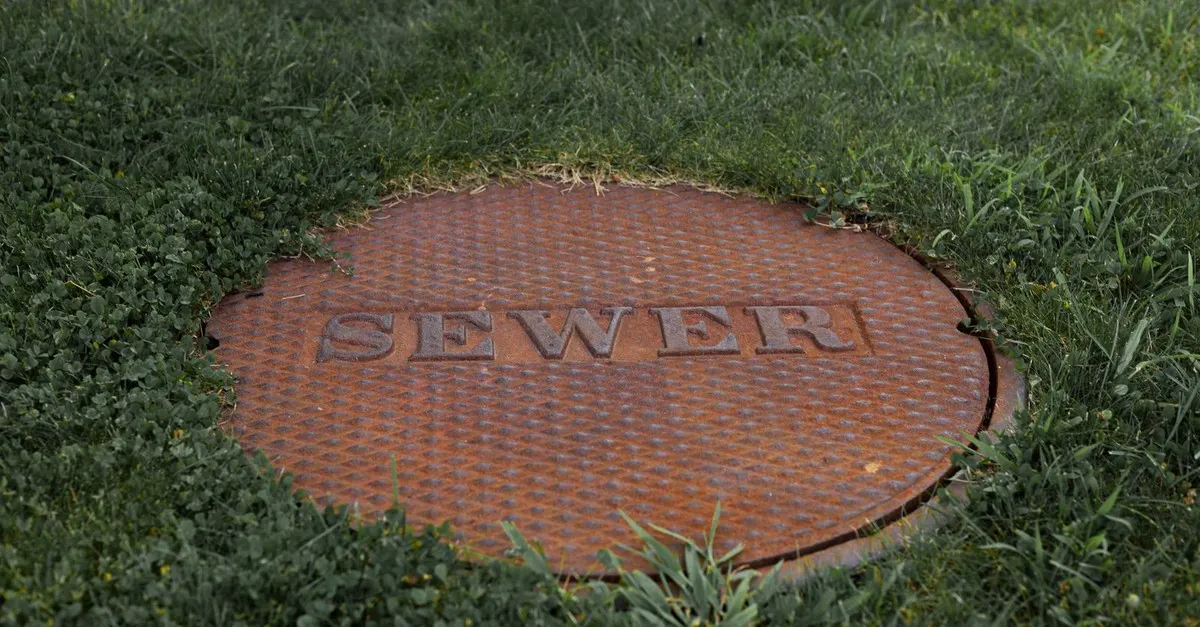
Sydney Water's pipes do not only run under the street. It sells a document called a service location print specifically to show "our pipes and structures on a property", along with where your property connects to its sewer. If there is a maintenance hole inside your fence, it may well be theirs.
3. Ask the neighbours either side
This is the fastest test there is and almost nobody does it. Knock on the doors either side, or message the strata group if you are in a block, and ask one question: are your drains all right? Sydney Water treats neighbours having the same problem as a sign the blockage is in its main, because a private line only serves your property and the main serves the street.
The exception is a joint service, where one private pipe carries more than one property before it reaches the main. Sydney Water says these are more common in older parts of Sydney such as terrace housing and older industrial areas. If you are in an older semi or a row of attached cottages and next door is also backing up, it may be a shared private pipe rather than the main, and every owner connected to it shares the responsibility for it.
4. If the signs point to the main, ring Sydney Water on 13 20 90
Sydney Water's faults line is 13 20 90 and it runs 24 hours. Ring it if the overflow is coming from a maintenance hole on public land, if your neighbours are affected at the same time, if there is widespread flooding in the street, or if sewage keeps flowing out of your gully when nobody in the house is using water. Sydney Water says it can also help you work out where the blockage is.
If it turns out to be Sydney Water's pipe and the overflow has damaged your property, Sydney Water says it will arrange the clean-up and repairs and assign a Customer Advocate to manage the case. That only happens if they know about it, so ring before you start hosing anything down.
5. If it is yours, get a licensed plumber to clear it and look at it
If the main is flowing and the neighbours are fine, the blockage is almost certainly in your private line, and clearing it is your cost. That is not Sydney Water being difficult: it is where the ownership line sits. A licensed plumber will clear the private service first with an eel or a jetter, working from your gully or an inspection opening, and on a line that has blocked before, run a camera through it to see what caused it.
The part that protects your wallet is what happens if the plumber finds the fault is past your connection. Sydney Water's guide for plumbers tells them to ring 13 20 90 immediately, give their licence number, and get a work order number. It also tells them not to start any excavation before calling, because Sydney Water has to inspect its main first. A plumber who knows this will stop and ring. One who does not can dig a hole Sydney Water will not pay for.
Sewer backing up right now?
A licensed Parramatta plumber can clear your line and tell you honestly whose pipe it is, 24/7.
6. Keep the job number, the invoice and the footage
If you paid a licensed plumber who found the blockage was in Sydney Water's pipes, you can claim your reasonable out-of-pocket costs. The claim needs the job number the plumber got when they rang 13 20 90, so make sure they rang and write it down. Then keep the invoice, any timesheet, and details of any digging.
Sydney Water says claims take up to eight weeks to process. Its plumbers' guide also caps a single visit at two hours of claimable work, and says camera work is only claimable where Sydney Water approved it before it was done. If a plumber has found the problem in the main, they can claim their investigation costs directly as long as you have not already paid them, which is worth asking about before you settle the bill.
7. Where your pipe ends and Sydney Water's begins
Sydney Water's wording is precise: property owners own all wastewater pipes and fittings "up to where they connect to our water system, including the point of connection". The main and the junction on it belong to Sydney Water. The pipe that runs into that junction, and the connection itself, belong to you.
That split has three consequences people only find out about the expensive way:
- Roots at the junction are yours. Sydney Water owns the junction, but the owner is responsible for clearing tree roots that enter it at the point of connection, and for damage to the junction or its collar caused by roots or by excavation. If the junction gets damaged while roots are being cleared, Sydney Water may repair it at no cost, but you still pay for the digging to expose it.
- Deep connections are theirs. Where the fault is at a point of connection more than 2.5 metres deep, Sydney Water takes over the repair. It will not reimburse digging to that depth that was done without its say-so.
- Your pipe can leave your block. Sydney Water says the point of connection "is sometimes outside your property boundary and can be under a public road". In that case the pipe under the footpath is still yours.
You do not have to guess where your connection is. From Sydney Water Tap in, a service location print showing Sydney Water's pipes on the property and your point of connection costs $22.68, and a sewerage service diagram showing your private pipes costs $33.67. Both prices are Sydney Water's for 1 July 2026 to 30 June 2027. On an older Parramatta block, where the line may have been extended and patched over decades, the diagram is worth having before anyone starts digging.
8. If your pipe has collapsed under the footpath or road
This is the scenario that frightens people, because it sounds like you are paying to dig up a road. For most homes you are not. Sydney Water runs a Collapsed Private Services in Public Land program that repairs a residential owner's collapsed sewer pipe for free where the only way to fix it is to excavate a road or footpath.
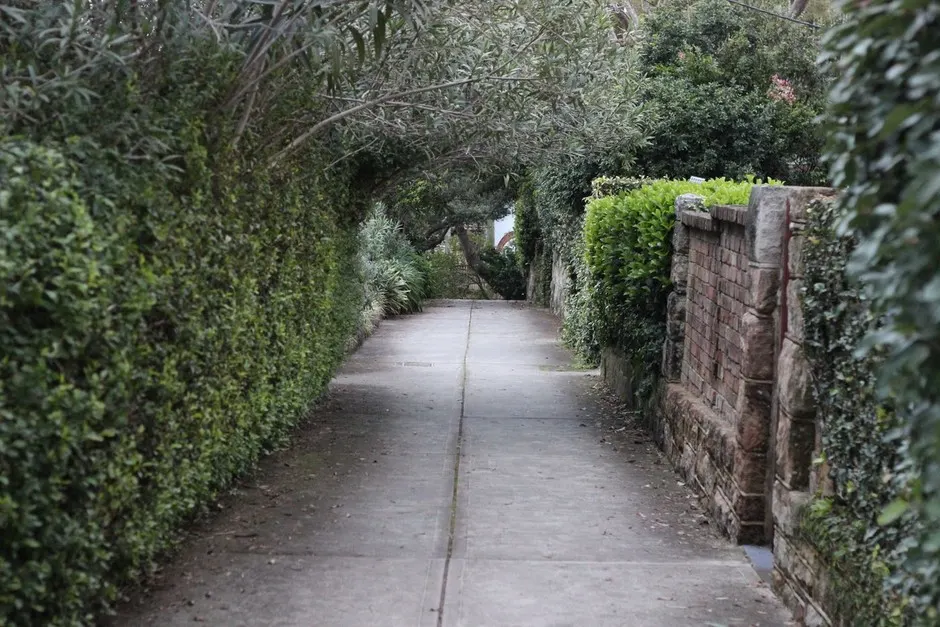
The conditions are strict, and they are worth knowing before your plumber picks up a shovel:
- A licensed plumber must provide evidence, normally clear camera footage or photos, that the pipe has collapsed. Sydney Water defines a collapse as more than 25 per cent of the pipe.
- It must be on public land outside your boundary, under a roadway or a hard footpath, not a grass verge, dirt path or green area.
- It must be something relining cannot fix. Cracks, roots, wipes or a slightly dislodged pipe are your plumber's job.
- Your plumber must not already have exposed the pipe in the road or footpath.
You apply by emailing the evidence to Sydney Water's Collapsed Services team, using the address in its program guide for customers, and signing Sydney Water's terms and conditions. It says the assessment takes up to two business days and repairs are normally done within 10 days, weather and road permits allowing. If you have no footage, you can ask Sydney Water to send an independent plumber, and it pays if the collapse is confirmed. If it is not, that plumber bills you directly, currently $500 plus GST for the first half hour and $150 plus GST for each half hour after. And even when Sydney Water is doing the repair, you are still responsible for containing the overflow from your own pipe.
If you would rather use your own plumber for a pipe under the footpath, you can. In the City of Parramatta council area, any work in the road reserve, which is the Council land outside your boundary, needs a Road Opening Permit from Council before it starts.
9. Why Parramatta blockages so often end up in this argument
The ownership line matters more here than in a newer suburb, because of what is in the ground and what is growing over it.
Old earthenware and roots. Much of the older housing in Harris Park, North Parramatta and Granville still drains through vitrified clay sewer laid in short lengths, and every joint is a seam. City of Parramatta's own claims page says tree roots usually enter pipes "where there is already a crack, failed seal or deterioration". The junction on the main is one more joint, and roots at the junction are the owner's to clear. That is the single most common reason a Parramatta owner is surprised to find the bill is theirs.
Ground that moves. Parramatta sits on the Wianamatta shale of the Cumberland Plain, which weathers to a reactive clay that swells when it is wet and shrinks when it dries. Over years it works rigid old joints apart and drops sections out of line, which is how a cracked pipe becomes a displaced one, and a displaced one becomes a collapse.
Council street trees. If the roots came from a street tree, most people assume Council pays. City of Parramatta lists damage "allegedly caused by tree roots" where Council "was not previously aware of the issue" as a case where it is unlikely to be responsible, and says property owners are responsible for maintaining the sewer pipes on their property. It suggests going to your home insurer first, and says an investigation takes 6 to 8 weeks.
Trees on your own block. Removing the roots around a pipe, or the whole tree, needs a Tree Permit from City of Parramatta, and Council asks for a sewer diagram and a licensed plumber's report with the application. Four species are the exception: Council lets you prune or remove a Poplar, Willow, Camphor Laurel or Liquidambar without consent where its trunk is within 5 metres of a sewer. Check which council you are in first. Merrylands and parts of Granville, Westmead, Wentworthville and Toongabbie sit in Cumberland City Council, not City of Parramatta.
10. Apartments and rentals: whose problem is it?
In the suburb of Parramatta itself, 85.6 per cent of homes were flats or apartments at the 2021 Census, and 70.2 per cent were rented. Against NSW figures of 21.7 per cent and 32.6 per cent, that makes this section the one most local readers actually need.
In a strata building, the sewer under the building is not yours to fix. The NSW common property memorandum puts "floor drain or sewer in common property" and "pipes within common property wall, floor or ceiling" on the owners corporation. The connection to Sydney Water's main is the building's, not any one lot's, so a blocked building sewer goes to the strata manager or building manager, who books the plumber. Your scheme's by-laws decide the fine print, and the memorandum applies only where a scheme has adopted it.
If you rent, a blocked sewer is the landlord's to fix, not yours to diagnose. NSW lists "a blocked or broken toilet" as an urgent repair. Tell the landlord or agent straight away. If you cannot reach them and you arrange the repair yourself, you can be reimbursed up to $1,000 within 14 days of giving them written notice, provided the work was done by a licensed tradesperson, preferably the one named in your tenancy agreement.
11. Five things that make a blocked sewer worse
- Letting anyone dig before Sydney Water has looked. If the fault is in the main, excavation done before the call is not reimbursed. The same applies under the footpath: exposing the pipe yourself rules you out of the free collapse repair.
- Paying the plumber without getting the job number. No job number, no claim. Ask for it before they leave.
- Carrying on using water. It fills the line, pushes sewage out of the gully or up through a floor waste, and destroys the one test that proves a blockage is in the main.
- Paving over or blocking the gully. It is the relief point that keeps sewage out of the house. Cover it and the next overflow comes up inside instead.
- Hacking at a tree without checking the rules. Removing roots around a pipe, or the tree, without a City of Parramatta Tree Permit creates a second problem on top of the first.
12. When it is a real emergency, and when it can wait
Treat it as urgent, day or night, if sewage is coming up inside the house, if it is overflowing somewhere children or pets can reach it, or if it will not stop even with no water running. If the overflow is from a maintenance hole or the whole street is affected, the urgent call is to Sydney Water on 13 20 90, not to us.
If the only symptom is a slow drain, a gurgling toilet or a gully that fills a little when the washing machine empties, you have time. Stop using water heavily, book a plumber in business hours, and ask for a camera if it has happened before. That is an appointment, not an after-hours call-out, and we will tell you honestly which one you are looking at.
- You own the pipe from the house to Sydney Water's main, including the connection, even if it runs under the footpath.
- A maintenance hole overflowing on public land, neighbours affected, or overflow with no water running: ring Sydney Water on 13 20 90.
- Roots at the junction are the owner's to clear, and City of Parramatta is unlikely to pay for street tree roots it did not know about.
- A pipe collapsed under a hard footpath or road can be repaired free by Sydney Water, but only if nobody has dug it up first.
- Nobody should dig until Sydney Water has been rung and has given a job number. Keep it, with the invoice, for any claim.
Blocked sewer FAQs
Who pays to clear a blocked sewer in Parramatta?
It depends on where the blockage is. If it is in your private pipe, anywhere from the house up to and including the point of connection to Sydney Water's main, you pay. If it is in Sydney Water's main, Sydney Water fixes it, and you can claim reasonable out-of-pocket costs for a licensed plumber who found it there, as long as the plumber rang 13 20 90 and got a job number.
Does Sydney Water clear tree roots from my sewer junction?
No. Sydney Water owns the junction on its main, but the property owner is responsible for clearing roots that enter it at the point of connection and for damage caused by roots or excavation. If the junction is damaged while the roots are being cleared, Sydney Water may repair it at no cost, but the owner pays to dig down to it.
Will City of Parramatta pay if a street tree's roots blocked my sewer?
Usually not. The Council lists damage allegedly caused by tree roots, where it was not previously aware of the issue, as a case where it is unlikely to be responsible, and says owners are responsible for maintaining the sewer pipes on their property. It suggests contacting your home insurer first, and says an investigation takes 6 to 8 weeks.
My sewer pipe has collapsed under the footpath. Do I have to pay to dig it up?
Not always. Sydney Water's Collapsed Private Services in Public Land program repairs a residential owner's collapsed pipe for free if it is under a road or hard footpath outside the boundary, more than 25 per cent collapsed, cannot be relined, and has not already been dug up. Your plumber sends the camera footage to Sydney Water's Collapsed Services team. A collapse under a grass verge is not covered.
I rent a unit in Parramatta and the sewer is blocked. Who do I call?
Your landlord or agent, straight away. A blocked or broken toilet is an urgent repair in NSW, and in a strata building the sewer in common property is the owners corporation's to fix. If you cannot reach the landlord and arrange a licensed tradesperson yourself, you can be reimbursed up to $1,000 within 14 days of written notice.
How do I find out where my sewer connects to Sydney Water's main?
Order a service location print from Sydney Water Tap in. It shows Sydney Water's pipes and structures on the property and your point of connection, and costs $22.68 for 2026-27. A sewerage service diagram of your private pipes costs $33.67. City of Parramatta also asks for a sewer diagram with any tree permit application about roots in a pipe.