A gurgling toilet is the sound of air, not water. There is a small body of water sitting in the bend of the pan, and it is the only thing between your bathroom and the drain. When the pipework below cannot get the air it needs, it drags at that seal until air breaks through, and you hear it. Which is why swapping the pan or the cistern almost never fixes it. The toilet is the messenger.
So the question worth answering is not how to stop the noise, it is where the drain is struggling to breathe. You can narrow that down at home in about ten minutes, and it will tell you whether this is an appointment on Thursday or something you should not sleep on.
A gurgle means air is being pulled or pushed through the water seal in your toilet's trap, because the drain below it cannot breathe properly. Nine times out of ten that is a partial blockage further down the line or a venting problem, not a fault in the toilet. Work out which fixture sets the noise off, check the gully outside, and get a camera on it while it is still only a noise. In a Parramatta apartment, where 85.6 per cent of dwellings are flats, it is far more often the building's shared stack than anything in your bathroom.
- Notice exactly when it gurgles: on a flush, when something else drains, or on its own
- Run the laundry tub, shower and bath one at a time and listen at the pan
- Check the overflow relief gully outside, or ask a neighbour if you are in a unit
- Ease off the washing machine and long showers until you know what it is
- Book a camera inspection, because a gurgle is the cheap stage of this problem
On this page
1. What the gurgle actually is
Every fixture has a trap, a bend that holds a little water and seals the room off from the drain. Vents let the pipework breathe, so that when a slug of water goes past, air gets in behind it and out in front of it without disturbing the water sitting in those traps.
The National Construction Code is unusually specific about this. Volume Three requires ventilation good enough that when any fixture discharges, there is less than a one per cent likelihood during the annual peak hour that air pressure at any trap seal moves more than 375 pascals from atmospheric, and that at pressures up to that limit the seals are not pulled below 25 millimetres, or 70 millimetres in a pressurised room. In plain terms, flushing one toilet should never suck the water out of a trap elsewhere in the building. If you can hear it, the pressure has already gone past what the venting was meant to absorb.
That also explains the two noises. A suck and a gurgle, with the level in the bowl dropping, is negative pressure pulling air in through your trap because it could not get it anywhere else. Bubbling, where the water rises and bubbles break the surface, is positive pressure pushing back the other way, and it is generally the more serious of the two. In the Parramatta towers bubbling is the common one; in the older cottages it is usually the suck.
2. When it gurgles tells you where the problem is
Before touching anything, work out the pattern. There are three, and they point at different parts of the system.
It gurgles when you flush it, and the bowl empties slowly. The restriction is close by, in the pan or the branch just past it. That is the most contained version, and the one most likely to clear with the steps in our guide on what to try on a blocked toilet.
It gurgles when something else drains, the shower, the bath, or the washing machine pumping out. This is the most common report we get and the most useful one, because it means the restriction sits downstream of where those two pipes join, out in the main line rather than anywhere you can reach. A washing machine emptying is the biggest slug of water most homes produce, so it is the most reliable trigger to test with.
It gurgles on its own, with nobody using water. Take this one seriously. The drain is moving air through your trap because it cannot move it where it should, or the main beyond your property is surcharging and pushing back. On the older Parramatta streets that second one is often the first sign a shared line is closing over, not just yours.
3. The ten-minute test you can do yourself
Run one fixture at a time, thirty seconds each, and listen at the toilet after each one. Laundry tub, then shower, then bath, then kitchen sink. Note which one sets it off. Then flush the toilet on its own and watch the level once it settles: if it sits noticeably lower than it used to and creeps back slowly, the trap is being pulled rather than refilled.
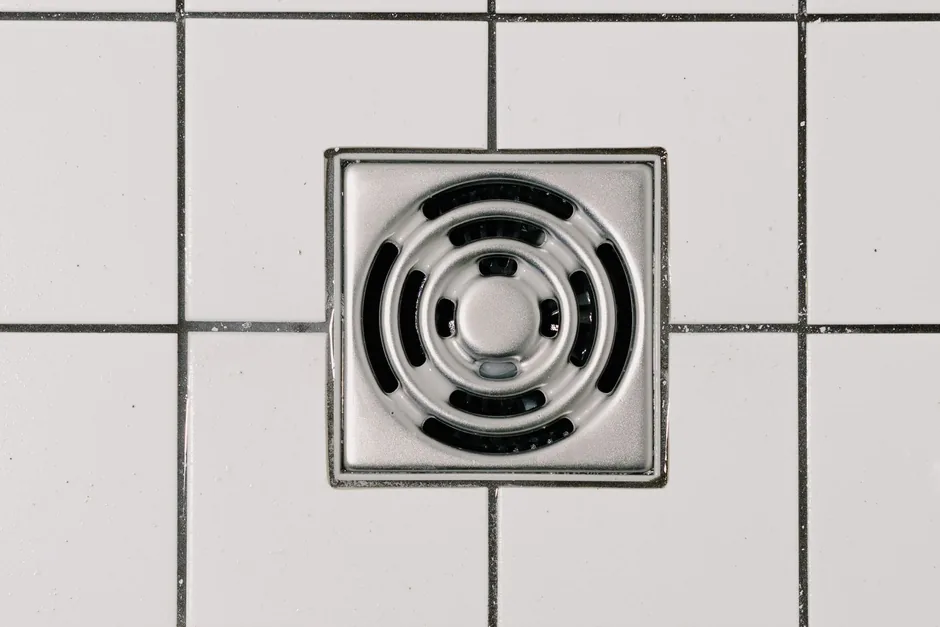
Now go outside to your overflow relief gully, the grated drain sitting low in the yard. Look for water standing in it, or a tide mark showing it has surcharged before. NSW requires that gully to sit at least 150 mm below the lowest fixture on the drain and at least 75 mm above finished ground level, so a backed-up line spills into the garden instead of up through your shower. Building Commission NSW re-issued an advisory note on those clearances in June 2026 because they keep being installed wrong, and on the older Parramatta blocks the usual reason is a later landscaping or paving job that buried the clearance.
If you live in a unit, and around here most people do, there is no gully to look at and this part of the test does not exist. Your version of it is the two neighbours in section five.
4. Check what you can see of the vent
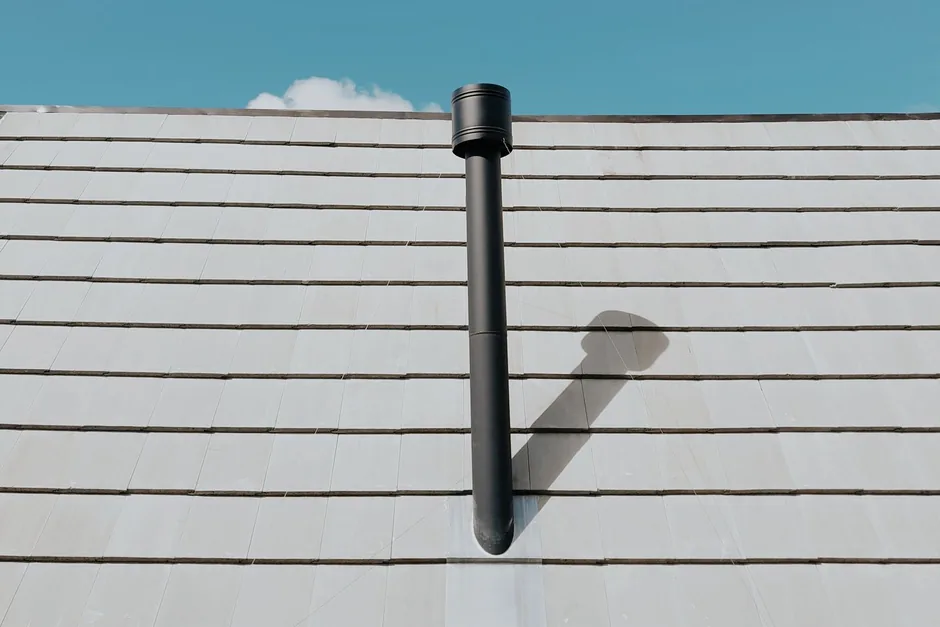
If you are in a freestanding house, step into the yard and look at the roof. There should be an open vent pipe finishing above the roof line, and on the older cottages around Harris Park and North Parramatta it is usually an obvious pipe running up an external wall past the gutter. If it has been crushed, if birds or possums have been at it, or if a re-roof or an extension capped it, the drain has nowhere to draw air except the traps inside your house. That is a common cause of a gurgle that starts for no obvious reason. In a unit the equivalent riser is inside the building and not yours to inspect.
Newer and renovated homes often use an air admittance valve instead, tucked into a wall or a ceiling space. It is a one-way valve: air in, nothing out. NSW Fair Trading's technical note 4/2013 sets out where they are allowed, and the boundaries matter. They can serve as a trap vent, a group vent, a branch drain vent, or a stack vent where the stack does not extend through 10 or more floor levels, and only in a system that still has at least one open upstream vent off the main drain. They are never permitted for the upstream venting of a main drain, and where a drain incorporates a boundary trap, both vents have to be open vents rather than a valve.
The practical point is simpler. An air admittance valve has a moving diaphragm, and moving parts wear out. They stick, they perish, they fail shut, and when one does the drain goes looking for air through your pan. A gurgle that started shortly after a bathroom renovation is very often exactly this.
AS/NZS 3500.2 clause 6.10.3 requires an air admittance valve to be accessible for service, repair or replacement, to be able to draw enough air, and to have ventilation openings if it sits in a wall space. Building Commission NSW advisory note 18/2022 reports that during recent audits of Class 2 buildings, these valves were frequently found sealed inside walls with no access panel, cover or door, some of them behind waterproofing, tiling and fire rating. Diagnosing that is a five-minute job. Reaching it is not.
Gurgling that will not settle?
A camera down the line finds the cause in one visit. A licensed Parramatta plumber, 24/7.
5. If you are in an apartment, which around here is most people
At the 2021 Census, 85.6 per cent of dwellings in Parramatta were flats or apartments, against 7.7 per cent separate houses and 5.7 per cent semis, terraces and townhouses. So for most readers of this page, the toilet does not drain into a pipe under a back yard. It drains into a stack shared with every unit above and below, and that changes the diagnosis completely.
Water falling down a vertical stack drags air with it, making negative pressure high up and positive pressure at the bottom where the flow turns into the drain. The venting and the stack's diameter are what keep those swings away from your trap. Between about seven and nine in the morning the swings are at their largest, which is why a unit gurgle so often has a timetable.
NSW rules tighten as buildings get taller, and Parramatta is exactly where that matters. An air admittance valve is only permitted as a stack vent where the stack does not extend through 10 or more floor levels, so beyond that the stack has to be open to atmosphere. And AS/NZS 3500.2 clause 6.11.3 requires two pressure attenuators, arranged in series, at the base of a stack that extends through more than 25 floors. That is not a hypothetical band in this postcode: the towers at 180 George Street run to 66 levels and were completed in 2023, and the CBD and Westmead high-rise belt is full of buildings well inside that range.
So the first move in a unit is not to call a plumber, it is to knock on two doors. Ask the units directly above and below whether theirs does the same thing, and whether it started for several of you at once. If it did, it is the stack and it belongs to your strata or building manager. If it is only yours, it is your branch, and that is ours.
6. Why so many Parramatta drains do this
Once you get past wipes and the usual suspects, the recurring version of this noise around here has a fairly specific cause, and it starts underground.
The ground will not sit still. Parramatta sits on the Cumberland Plain, underlain by Wianamatta Shale, which weathers into a heavy clay with appreciable shrink and swell. It takes on water and expands, dries out and contracts, and across a Sydney year of wet and dry spells it lifts and drops everything buried in it. Give that a few decades and it works old joints apart and puts sags into a drain that was laid to an even fall. A sag holds water permanently, and a pipe that is half full where it should be empty cannot pass air freely. That is your gurgle, and it is the same ground movement behind most of the burst water pipes we get called to locally.
NSW takes that ground seriously enough to regulate for it. Schedule 3 of the Plumbing and Drainage Regulation 2017 requires flexible joints in a drain laid in ground that is filled, unstable, water-charged, or classed H1, H2 or E, with a site-specific design prepared by a recognised expert and supplied to the plumbing regulator alongside the Notice of Work. That rule exists because rigid drains in reactive clay fail. The catch is obvious: the drain under a pre-war cottage in Harris Park was laid decades before anybody submitted a design for it.
The pipe material makes it worse. Vitrified clay, usually called earthenware, was the standard sewer material until plastics took over in the mid-1970s, and plenty of the older streets in Harris Park, North Parramatta and Granville still run on it. It was laid in short lengths with mortared joints that were never genuinely watertight, so every joint is a way in. Roots are not hunting your sewer, they are hunting water, and a slightly open joint on a warm damp line is the best thing in the garden. The first stage of a root problem is not a blockage, it is a restriction, and a restriction sounds exactly like this.
The newer half of the suburb has the opposite story. Post-1970s estates and the towers are on PVC with rubber-ring joints that roots rarely get into. When those gurgle it is far more often a vent issue than a defect in the pipe.
One local footnote that is genuinely not a coincidence: the NSW technical note governing where air admittance valves may be used is issued out of the Better Regulation Division in Parramatta.
7. Five things that make a gurgling drain worse
- Carrying on with the washing machine and dishwasher. Every big discharge has to force past the restriction, and it surfaces at the lowest opening in the system: the gully outside if you are lucky, a floor waste inside if you are not.
- Chemical drain cleaner. It gives off heat, it is hard on ageing clay and on seals, and it does essentially nothing to tree roots, which is what a lot of local restrictions actually are.
- Capping the roof vent to stop a smell. Close the vent and the drain takes its air through your traps instead, which is worse and much harder to diagnose later.
- Topping the bowl up so it looks normal. That hides the symptom for an afternoon and tells you nothing.
- Deciding it is just an old house being an old house. On a pre-1970s Parramatta line, a gurgle is a defect announcing itself early. It is the cheapest moment this problem will ever be.
8. When it is an emergency, and when it can honestly wait
Call straight away, at any hour, if wastewater is coming up through a shower, floor waste or gully; if more than one fixture is backing up; if the gully outside is holding water or spilling; if there is a persistent sewer smell with the noise, which means a trap seal has already gone rather than just being under strain; or if you are in a unit and neighbours are affected too.
It can reasonably wait for a booked appointment if the gurgle is occasional, everything still drains at its normal speed, nothing smells, and nothing is coming back up. That is a restriction rather than a blockage, and a booked visit costs less than an after-hours one. Waiting is not the same as ignoring it though. On a Parramatta clay line the gap between a first gurgle and a full blockage is often a single wet season, because that is how quickly the ground moves the joint the roots are already in.
One more call worth knowing about. If the overflow is visible beyond your boundary, such as from a maintenance hole on public land, if neighbours have the same problem at the same time, if there is widespread local flooding, or if it keeps overflowing when nobody at your place is using water, it may well be Sydney Water's pipe rather than yours. You own the wastewater pipes up to the point where they connect to their network. Their faults line is 13 20 90, 24 hours a day, and if a licensed plumber finds the blockage in their pipes and reports it with a job number, you can claim reasonable out-of-pocket expenses back, which they advise can take up to eight weeks to process.
9. How to stop it coming back
- Get a camera down the line once, especially if the place predates the mid-1970s. Knowing where the bad joints and sags actually are turns a recurring emergency into a planned job, which is most of what our blocked drain work is.
- Fix the joint, not just the roots. Cutting roots clears the line but leaves the way in. Relining the affected section seals the joint from the inside without opening the ground, which matters on the older blocks where the sewer runs under a mature garden, a narrow driveway, or a property inside a heritage conservation area where excavation is not a simple decision.
- Keep the roof vent clear, and never cap it. If you have an air admittance valve instead, make sure there is a real access panel in front of it before the tiling goes on.
- In a unit, report the first gurgle to the building rather than the fifth. Stack problems get expensive in proportion to how long everybody assumed it was somebody else.
- Nothing but pee, poo and paper. Wipes labelled flushable leave the house fine and knit together further down, right where the restriction already is.
- A gurgle is air being dragged through the water seal in your pan. The toilet is reporting the problem, not causing it.
- Which fixture triggers the noise tells you how far down the line the restriction sits.
- Check the gully outside. Water standing in it means the main line is already restricted.
- In a Parramatta apartment, a morning gurgle is usually stack pressure and belongs to the building. Ask two neighbours before you book anyone.
- On the older clay lines, reactive Wianamatta clay opens the joints and roots do the rest. A gurgle is the cheap stage of that story.
Gurgling toilet FAQs
My toilet gurgles when the shower drains. Is that a blockage?
Usually, yes, and the useful part is where. If draining one fixture makes another gurgle, the restriction sits downstream of where those two pipes join, so it is out in the main line rather than in the pan. Go and look at your overflow relief gully, the grated drain low in the yard. If it is holding water, the line is already partly blocked. On the pre-1970s streets around Harris Park, North Parramatta and Granville, where the sewer is still vitrified clay with mortared joints, this pattern is very often fine roots that have found a joint and started catching paper. Left alone, that becomes an overflow.
I live in a Parramatta apartment and my toilet gurgles in the morning. Is it mine or the building's?
Most likely the building's. At the 2021 Census, 85.6 per cent of dwellings in Parramatta were flats or apartments against 7.7 per cent separate houses, so your pan almost certainly drains into a stack shared with every unit above and below you. When the building gets busy in the morning, water falling down that stack drags air with it and pushes pressure back through whichever trap gives first. NSW rules tighten as buildings get taller: an air admittance valve is only permitted as a stack vent where the stack does not extend through 10 or more floor levels, and AS/NZS 3500.2 clause 6.11.3 requires two pressure attenuators in series at the base of a stack extending through more than 25 floors. Parramatta has plenty of buildings in that range, including the 66-level towers at 180 George Street completed in 2023. Ask the units above and below you whether theirs does it too. If it does, it goes to your strata or building manager rather than a plumber you book yourself.
Why did my toilet start gurgling right after a bathroom renovation?
Because something changed in how the drain gets air, and the usual culprit is an air admittance valve. It is a one-way valve that lets air into the pipe without letting sewer gas out, and its moving diaphragm eventually sticks or perishes. AS/NZS 3500.2 clause 6.10.3 says one must be accessible for service, repair or replacement, must be able to draw enough air, and must have ventilation openings if it sits in a wall space. Building Commission NSW advisory note 18/2022 records that during recent audits of Class 2 buildings these were frequently found sealed inside walls with no access panel, sometimes behind waterproofing, tiling and fire rating. If that describes your renovation, the diagnosis is quick and the access is the expensive part.
My toilet gurgles and I can smell sewer gas. How urgent is that?
Treat it as urgent. The water in the bend of your pan is the only thing between the room and the drain, and the National Construction Code sets the design target that at pressures up to plus or minus 375 pascals those seals should not be pulled below 25 millimetres, or 70 millimetres in a pressurised room. A gurgle means the pressure has already gone past what the venting was meant to absorb. A smell on top of it means a seal has actually been lost, so the barrier is gone rather than under strain. Stop heavy water use, do not cap the vent to hide the smell, and get it looked at.
Why do drains around Parramatta keep doing this?
The ground. Parramatta sits on the Cumberland Plain over Wianamatta Shale, which weathers into a heavy clay with appreciable shrink and swell. Across a Sydney year of wet and dry spells that clay lifts and drops whatever is buried in it, and over decades it works old joints apart and puts sags into a line laid to an even fall. A sag holds water permanently, and a pipe that is half full where it should be empty cannot pass air freely, which is exactly what you hear. NSW regulates for that ground: Schedule 3 of the Plumbing and Drainage Regulation 2017 requires flexible joints in a drain laid in ground that is filled, unstable, water-charged or classed H1, H2 or E, with a site specific design by a recognised expert lodged alongside the Notice of Work. The catch is that the drain under an older Parramatta cottage was laid long before anybody submitted a design for it.
The gurgling turned into an overflow out in the street. Whose problem is that?
Possibly Sydney Water's. You own the wastewater pipes up to the point where they connect to their network. It is likely to be their pipe if the overflow is visible beyond your boundary, such as from a maintenance hole on public land, if neighbours have the same problem at the same time, if there is widespread local flooding, or if it keeps overflowing when nobody at your place is using water. Their faults line is 13 20 90, 24 hours a day. If a licensed plumber finds the blockage in their pipes and reports it with a job number, you can claim reasonable out-of-pocket expenses back, which they advise can take up to eight weeks to process.