No. Sydney's tap water is soft, and Parramatta's is soft too. Sydney Water's own testing put the water reaching Parramatta taps at an average of 52.5 mg/L of hardness over the year to 30 June 2026, under the 60 mg/L line where water starts being called hard. It is also safe to drink straight from the cold tap. Most of the advice you will read about hard water, softeners and descaling was written for somewhere else.
What follows is the practical version: how to check the water at your own address, the few habits that genuinely matter, how to set up your appliances, and how to tell a Sydney Water problem from a problem in your own pipes. After that, the numbers behind it and what soft water means for the plumbing in a Parramatta home. If you have discoloured water that will not clear, skip to step 7.
Sydney tap water is soft, not hard. The Parramatta CBD is supplied from Prospect Water Filtration Plant, and the water in that delivery system averaged 52.5 mg/L hardness over the last year, with a pH around 7.9. It meets the Australian Drinking Water Guidelines, including the PFAS limits, so it is safe to drink. You do not need a water softener. A filter is a taste choice here, not a safety one.
- Look up your own address on Sydney Water's water analysis tool
- Drink and cook from the cold tap, never the hot
- Run the cold tap briefly after water has sat in the pipes
- Chill a jug in the fridge if the taste bothers you
- Set the dishwasher and coffee machine to their softest setting
- If you want a plumbed-in filter, have a licensed plumber fit it
- Check whether discoloured water is from every tap or just one
On this page
- Look up your own water
- Drink from the cold tap
- Run the tap after it has sat
- Fix the taste, not the safety
- Set appliances for soft water
- Filters: fit them properly
- Discoloured water: yours or theirs?
- Why Parramatta's water is soft
- What soft water means for your pipes
- Five ways to waste money
- Real problem, or can it wait?
1. Look up the water at your own address
Start with the source rather than a blog. Sydney Water has a water analysis page where you type in your street address and it tells you which delivery system you are on, with the latest hardness, dissolved solids and pH for that area. It also links the full quarterly drinking water quality report for your system.
We ran it for a Church Street address in the Parramatta CBD. It came back as the Prospect East Water Delivery System, and the quarterly report for April to June 2026 shows that water is treated at Prospect Water Filtration Plant, drawing on Lake Burragorang at Warragamba Dam, Prospect Lake and the Upper Canal. Sydney Water notes its systems are interconnected, so a given street can sometimes be fed from a different system depending on operational needs. That is why it is worth checking your own address rather than assuming.
Two numbers are the ones to note down: total hardness in mg/L, and the same figure in German degrees (°dH), which is what a lot of European appliances ask for. For Prospect East, the typical range at customer taps was 48 to 57 mg/L.
2. Drink and cook from the cold tap, never the hot
This one is straight from NSW Health: use water from the cold tap for drinking and cooking. Water that has come through a hot water system can carry more dissolved minerals and metals, because of the heating process. That goes for every type of hot water system, old or new.
It matters most for the kettle, the pasta pot and baby formula, which are exactly the things people fill from the hot tap to save a minute. Fill them cold.
3. Run the cold tap after water has been sitting
Flush the cold tap for about 10 seconds first thing in the morning, and for at least 2 minutes before drinking or cooking if the water has been standing for an extended period, such as after a holiday. That is NSW Health's advice, because water that sits still in your pipes for a long time can pick up copper and occasionally lead from the pipes and brass fittings.
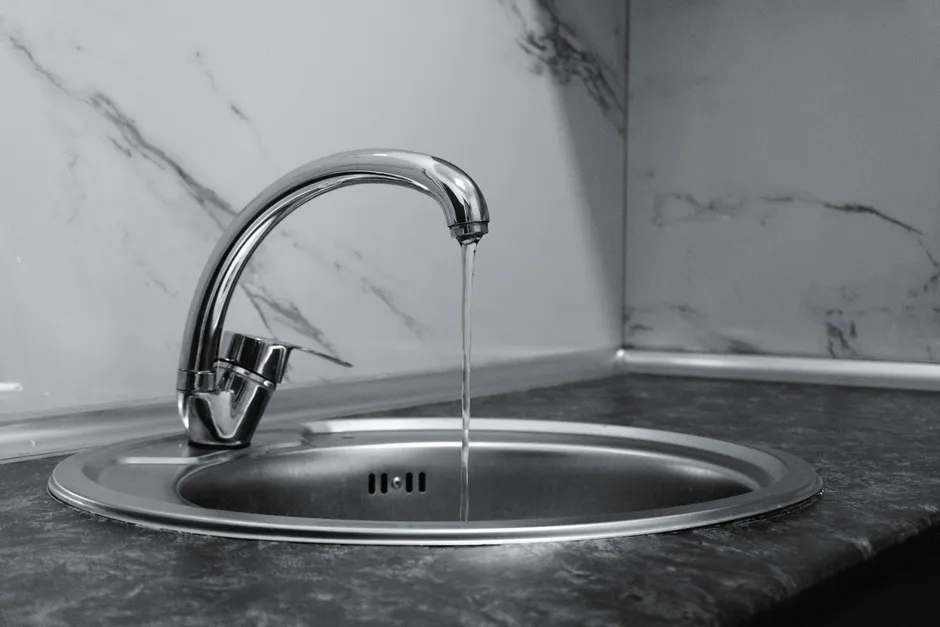
To put the metals in perspective for this area, Sydney Water's typical values at Prospect East customer taps were 0.0001 to 0.0004 mg/L of lead, against a guideline value of 0.005, and 0.0075 to 0.0384 mg/L of copper, against 2. The flush is a sensible habit, not a sign of a problem. The water you run off is fine for washing up or watering plants.
It is a more useful habit in some Parramatta homes than others. An older cottage in Harris Park, North Parramatta or Granville may still have sections of original galvanised steel pipe or old brass fittings, and in a unit that has been empty for a fortnight, the water in its own pipework has not moved in that time.
4. If the taste bothers you, fix the taste
If the taste or smell puts you off, stand tap water in a jug for an hour or so, or keep a bottle of it in the fridge. That is Sydney Water's own fix, it costs nothing, and the taste and smell should fade.
The most common complaint about Parramatta tap water is not hardness, it is that it tastes or smells a bit like a swimming pool. That is the disinfectant. Sydney Water adds chlorine and ammonia, which combine to form monochloramine, and it is deliberately kept in the water through the network so the water stays free of harmful germs all the way to your tap. The typical level at Prospect East customer taps is 1.16 mg/L, well under the guideline value of 3.
If you keep fish, follow Sydney Water's aquarium advice instead and use a water conditioner that removes chlorine and chloramine.
5. Set your appliances for soft water
New dishwashers, coffee machines and steam ovens often ask you to enter your water hardness during setup, so have the number ready. Sydney Water's conversion for European appliances is simple: divide mg/L by 100 to get mmol/L. At Parramatta's 52.5 mg/L average, that is about 0.5 mmol/L, or roughly 3 °dH.
Getting this right stops a dishwasher with a salt compartment treating water for hardness it does not have. The number is also the clearest sign that you do not need a whole-house water softener. There is very little calcium in this water for a softener to take out.
6. If you want a plumbed-in filter, have it fitted by a licensed plumber
If you want a filter for taste, a benchtop jug or a tap-mounted filter is a simple buy-and-use job. For one plumbed into the cold water line under the sink, book a licensed plumber to fit it.
A filter is a preference here, not a requirement. The water already meets the national guidelines, so the main reason to fit one is taste.
An under-sink filter that is teed into the cold water line is different. That is plumbing work, and in NSW you need a licence to do any plumbing work, regardless of the cost of the job. Unlicensed work can draw a fine of $22,000 for an individual. A badly made joint under the sink is also exactly the kind of slow leak that rots a cabinet base before anyone notices, and in a strata unit that leak can end up in the ceiling below. If you are renting, ask the landlord or agent first, since it is a fixture.
Change the cartridges on the schedule the maker gives. A spent cartridge is not doing anything for you.
7. Work out whether discoloured water is Sydney Water's or yours
Check whether the discoloured water is coming from every tap, from one tap, or only from the hot taps, and check the tap closest to your water meter too. Sydney Water's fault guidance uses exactly that split to tell a problem in its network from one in your pipes.
Brown, yellow or cloudy water is the one tap-water question that can genuinely need a plumber. Here is how the split works:
- Cloudy or milky, clearing from the bottom of the glass up in about 30 seconds: that is tiny air bubbles. Not a fault.
- Discoloured from every tap in the house: Sydney Water may be working on a main nearby, and your neighbours will see it too. It should run clear a few minutes after repairs finish. If it does not, call Sydney Water on 13 20 90, 24/7.
- Discoloured from one tap only: the fittings on your property may be old or need repair. Run that cold tap for 30 seconds and see if it clears. If it keeps coming back, it is a job for a licensed plumber.
- Discoloured, or black specks, from the hot taps only: the problem is in your hot water service, which may need repair or replacement.
Black specks from a single tap are usually a perished tap washer or O-ring, which our leaking tap guide covers, including what NSW lets you change yourself.
Brown water from one tap that won't clear?
That is usually old pipe or a failing hot water unit on your side of the meter. A licensed Parramatta plumber can trace it.
8. Why Parramatta's water is soft, in numbers
Water is classed as soft below 60 mg/L of calcium carbonate and hard above it. Sydney Water puts Greater Sydney as a whole at about 57 mg/L. Parramatta sits a little under that.
Here is what the April to June 2026 quarterly report for the Prospect East delivery system, published on 11 August 2026, shows for the 12 months to 30 June 2026:
- Total hardness: 52.5 mg/L average across 28 samples, typically 48 to 57 mg/L at customer taps. The aesthetic guideline value is 200.
- Calcium: 11.9 to 14.5 mg/L. This is the mineral that actually forms scale, and there is very little of it.
- Total dissolved solids: 107.5 to 137.4 mg/L, against a guideline of 600.
- pH: 7.71 to 8.01, averaging 7.9. Slightly alkaline, which is normal.
- Fluoride: averaging 0.96 mg/L at taps, against a target of 1.0.
- Water temperature at the tap: 14.5 to 23.6 °C across the year.
The comparison with the rest of the Sydney Water network is where it gets interesting, because "Sydney water" is not one thing. The other two Prospect systems, North and South, averaged 51.8 and 52.5 mg/L, so Prospect water is soft whichever of them feeds your street. Out west, the Orchard Hills Water Filtration Plant supplies the Penrith and Blue Mountains council areas straight from Warragamba Dam, and its system averaged 61.6 mg/L, with a typical range of 57 to 66. That is just over the line into hard. The Macarthur system averaged 41.9, Illawarra 39.0 and North Richmond 35.9. So "Sydney water is soft" is not a safe blanket rule out there. For Parramatta it holds.
On PFAS, which has been in the news, Sydney Water tests the treated water leaving Prospect Water Filtration Plant. Over the year to June 2026 it averaged about 1 nanogram per litre of PFOS, peaking at 1.9, against the current guideline value of 8. PFOA averaged 0.3 ng/L against 200, and PFHxS 0.8 against 30. The PFAS stories about elevated catchment levels in the Blue Mountains relate to that catchment and the Cascade plant, not to the Prospect supply.
9. What soft water means for the plumbing in a Parramatta home
This is the part that matters when something breaks, because a lot of generic plumbing advice assumes hard water and sends you after the wrong cause.
Hot water systems fail on age, anode and element, not scale. With this little calcium in the water, a furred-up tank is not the typical failure here. When a Parramatta hot water system stops heating or starts leaking, the usual suspects are a spent sacrificial anode, a failed element or thermostat, or plain old age. Our no hot water guide walks through what to check, and the leaking hot water system guide covers telling a relief valve doing its job from a tank that has let go.
Rust in the water points at old pipe, not the supply. Parramatta's older housing stock, especially pre-1970s homes in Harris Park, North Parramatta and Granville, can still carry original galvanised steel pipework, which corrodes from the inside over decades. Rust-coloured water from one tap in a house like that is usually telling you something about the pipe behind the wall. It is also why a section that has failed once tends to be followed by the rest.
Slow taps, tired shower heads and cisterns that will not fill are usually grit, rubber or a worn valve. The internet's vinegar-soak answer is a hard-water answer. Here, debris and perished seals are the more likely culprits, as the shower head and cistern guides explain.
10. Five ways to waste money on Parramatta tap water
- Buying a water softener. A softener removes calcium and magnesium. Parramatta's water averages 52.5 mg/L total hardness with 11.9 to 14.5 mg/L of calcium. It would have very little to do.
- Paying for a "descale" of a hot water system that has actually failed on its anode or element. If someone tells you scale killed your unit here, ask them to show you.
- Teeing in an under-sink filter yourself. It is licensed plumbing work in NSW, and a weeping compression joint under the sink is a slow and expensive leak.
- Filling the kettle from the hot tap. It saves seconds and goes against NSW Health's advice for drinking and cooking.
- Living with brown water from one tap. It rarely fixes itself, and in an older home it is often the first sign a galvanised run is near the end.
11. When it is a real problem, and when it can wait
Most tap-water worries do not need a plumber at all. A pool smell, cloudy water that clears in half a minute, or a question about your dishwasher setting are all answered by the steps above. A taste you simply prefer filtered is a shopping decision.
Call Sydney Water on 13 20 90 straight away if every tap in the house is discoloured and it does not clear a few minutes after nearby repairs, if the water tastes or smells like something other than chlorine, or if you think the water has made anyone unwell. Those are theirs to investigate, day or night.
Book a licensed plumber if discoloured water or black specks keep coming from one tap, if the problem is only on the hot side, or if you want a filter plumbed in. None of those are middle-of-the-night emergencies, so a normal booking is fine. If the hot water side is also leaking, or there is no hot water at all, that moves up the list, and our hot water team can come out.
- Parramatta's water is soft: the Prospect East system averaged 52.5 mg/L hardness over the year to June 2026, under the 60 mg/L line.
- It is safe to drink from the cold tap, and PFAS levels out of Prospect sit well under the national guideline values.
- The pool taste is monochloramine; a jug in the fridge for an hour takes the edge off for free.
- Set appliances to about 0.5 mmol/L or 3 °dH, and skip the water softener.
- Brown water from one tap, or only the hot side, is on your side of the meter and worth a licensed plumber's look.
Sydney tap water FAQs
Is Parramatta tap water hard or soft?
Soft. The Parramatta CBD is on Sydney Water's Prospect East delivery system, supplied from Prospect Water Filtration Plant, and its water averaged 52.5 mg/L of hardness over the year to 30 June 2026. Water is only classed as hard above 60 mg/L. The other two Prospect systems averaged 51.8 and 52.5 mg/L, so Prospect water is soft whichever one feeds your street. You can check your exact address on Sydney Water's water analysis page.
Is it safe to drink tap water in Parramatta?
Yes. Sydney Water's report for the Prospect East delivery system confirmed the water delivered in the April to June 2026 quarter was safe and met the Australian Drinking Water Guidelines. PFAS in the treated water leaving Prospect Water Filtration Plant averaged about 1 nanogram per litre of PFOS over the year, against a guideline value of 8. Drink from the cold tap, and run it for about 10 seconds first thing in the morning, as NSW Health recommends.
Why does Parramatta tap water smell like a swimming pool?
That is the disinfectant. Sydney Water adds chlorine and ammonia, which form monochloramine, and keeps it in the water all the way to your tap. The typical level at Prospect East customer taps is 1.16 mg/L, well under the guideline value of 3. Stand the water in a jug for an hour or so, or keep it in the fridge, and the smell and taste should fade.
Do I need a water softener or a filter in Parramatta?
You do not need a softener. Parramatta's water averages 52.5 mg/L total hardness with only 11.9 to 14.5 mg/L of calcium, so a softener would have very little to do. A filter is optional and mainly about taste. If you want one plumbed in under the sink, that is plumbing work and in NSW it must be done by a licensed plumber.
What water hardness should I set my dishwasher to in Parramatta?
Use about 0.5 mmol/L, which is roughly 3 °dH. Sydney Water's conversion is to divide the mg/L figure by 100, and Parramatta's Prospect East water averaged 52.5 mg/L over the year to June 2026. Check your own address on Sydney Water's water analysis page first, since its systems are interconnected and a street can occasionally be fed from a different one.
Why is only one tap giving brown water in my older Harris Park or Granville house?
If it is one tap and not the whole house, the cause is usually on your side of the meter. Older homes in Harris Park, North Parramatta and Granville can still have original galvanised steel pipe, which rusts from the inside. Run that cold tap for 30 seconds to see if it clears. If it keeps coming back, or it only happens on the hot taps, have a licensed plumber look at the pipe or the hot water system.