A cistern that will not fill is one of the few plumbing faults where the cause is usually sitting in plain sight, about half a metre from the pan, and takes under a minute to rule in or out. It is also one where most of the advice you will find online was written for a different country's plumbing and a much harder water supply than the one Parramatta is actually on.
Here is the order a plumber checks it in, which is deliberately the cheapest thing first. Work down the list and by the time you get to the bottom you will know whether you have a two second fix, a worn valve, or a water supply problem that has nothing to do with the toilet at all. If the toilet has stopped altogether and it is the only one in the house, you can skip to the end and call the local plumbers in Parramatta while you read.
Nine times out of ten it is one of three things: the stop tap behind the pan has been knocked shut, the inlet valve inside the cistern has worn out or clogged with grit, or the water pressure feeding the whole house has dropped. Check them in that order, because the first costs nothing. If every tap in the house is weak, the problem is not the toilet.
- Check the stop tap behind the pan is fully open
- Lift the lid off and watch a flush
- Run the other taps: is it only the toilet?
- Do Sydney Water's 18 litre test at the meter
- Look at the inlet valve, the float and the hose
- Rule out a fault on Sydney Water's side
- Book a licensed plumber for the repair itself
On this page
- Check the stop tap behind the pan
- Take the lid off and watch a flush
- Work out whether it is only the toilet
- Test the pressure Sydney Water's way
- The inlet valve, the float and the hose
- Rule out Sydney Water's side
- Call a licensed plumber
- Why cisterns stop filling around Parramatta
- The apartment complication
- Renting? This one has a legal name
- What you may legally do yourself
- Six things that make it worse
- When it is urgent, and when it can wait
1. Check the stop tap behind the pan
Start here, because it costs nothing and it is the answer more often than anything else on this page. Almost every Australian toilet has a small isolating tap where the flexible braided hose meets the wall or the floor, usually within arm's reach of the pan.
It gets closed by accident constantly. Someone cleans behind the toilet and knocks it. A previous plumber shut it to swap a washer and only opened it three quarters of the way. A kid finds it. The tell is a cistern that fills but takes far longer than it used to, because a part open tap throttles the flow without stopping it.
Turn it anticlockwise until it stops. If it is a screwdriver slot rather than a handle, the slot should end up in line with the pipe, not across it. Two cautions worth more than they look: a tap that has not moved in fifteen years can seize, so use steady pressure rather than force, and if it weeps around the spindle once you have moved it, stop and leave it. That is a job for someone with the right washer in the van, not a reason to keep turning.
Do not lean on it. The small chrome isolating taps used on toilet and basin connections are usually a light brass body, and a seized one can snap off the wall while you are holding it, which turns a slow cistern into water across the floor and a house you now need to isolate at the meter.
2. Take the lid off and watch a flush
With the stop tap confirmed open, lift the cistern lid off and put it somewhere flat and safe. Ceramic lids are heavier than they look and they chip if you stand them on end against a wall. Then press the button and watch what actually happens.
You are trying to sort the fault into one of three shapes, and each points somewhere different:
- Nothing comes in at all. No hiss, no movement, dead silence after the flush. That is a supply problem: the stop tap, the hose, or the water to the property.
- Water trickles in slowly and eventually gets there. Something is restricting the flow. Usually the inlet valve, sometimes pressure.
- It fills quickly but stops short of the water line marked inside the cistern, and the flush is weak as a result. That is nearly always the float set too low or a float that has filled up and sunk.
Write down which one you have before you read on, because the rest of this page splits along those three lines. Put the lid back on afterwards. An open cistern collects dust and, in a bathroom, a surprising amount of hair.
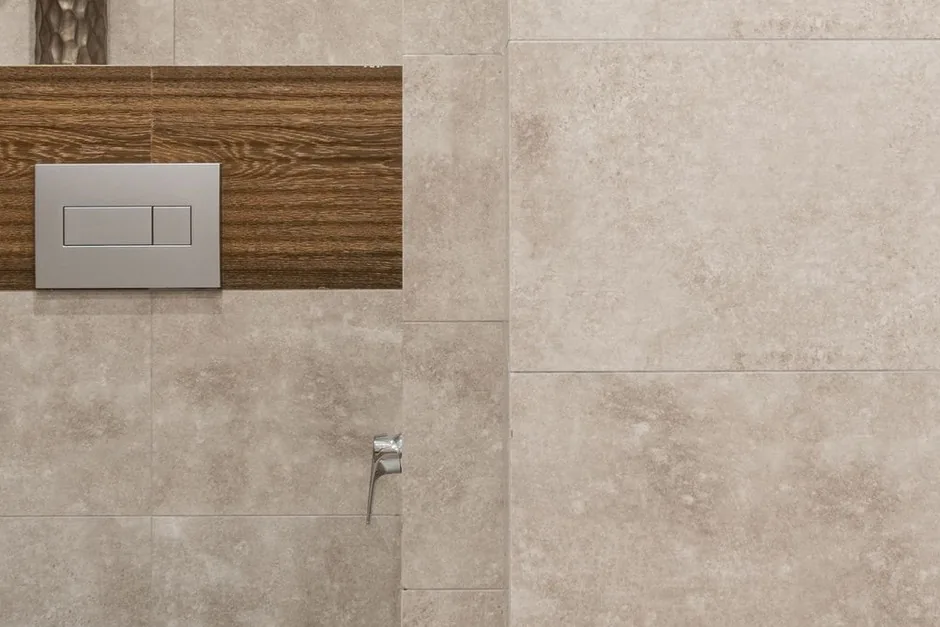
If you live in one of the newer Parramatta apartment buildings, there may be no lid to lift. Where the cistern is concealed in the wall, the same three shapes are diagnosed by ear instead: stand close to the flush plate, press it, and listen. Silence, a thin hiss that goes on far too long, or a rush that stops early tell you the same three things a visible cistern does. That is not a lesser test, it is just the version most of this suburb has to use.
3. Work out whether it is only the toilet
This is the step that decides whether you are looking at a toilet problem or a water supply problem, and skipping it is how people end up paying someone to replace a perfectly good valve. Go and run the cold tap at the bathroom basin, then the kitchen, then an outside tap.
If those all run normally and only the cistern is slow, the fault is in the toilet or the short run of pipe feeding it. If everything in the house is weak, the toilet is just the first thing that showed it, and you have a pressure problem to chase instead. Our guide to low water pressure around the house takes that from here.
In a flat there is an extra step, and it is the more useful one. Because 85.6% of Parramatta's occupied dwellings are apartments, most readers here share a supply arrangement with dozens of other homes, and you almost certainly have no water meter of your own to test with. So the question that replaces section 4 is simply whether anyone else in the building has the same thing. Sydney Water's own rule for sorting their fault from yours is that a problem at one fixture points back to your own fittings, while something affecting all your taps usually means work on pipes nearby, in which case the neighbours will have it too. In a block, ask two of them before you ask anyone for a quote.
There is a reason the toilet complains first. You would tolerate a slightly weaker kitchen tap for months without registering it, but a cistern has to move a fixed volume through the narrowest restriction in the bathroom, on a timer you notice every time. It is the most sensitive pressure gauge in the house and nobody thinks of it that way.
4. Test the pressure the way Sydney Water tells you to
If the whole house feels weak, stop guessing and measure it. Sydney Water publishes the test and the pass mark, which is a rare thing to be handed for free. They aim to supply a minimum of 15 metres head of pressure at the point of connection, and they say that equals a flow of 18 litres a minute at the garden tap.
Their method, from their own Testing your water pressure sheet, is four steps:
- Turn off every tap and water using device in the house, then lift your water meter cover and write down the black and red numbers.
- Fully turn on the front garden tap for one minute.
- Read the meter again and subtract the first reading. That is what you used in a minute.
- 18 litres a minute or more means you are getting 15 metre head or better.
If you come in under 18 litres, Sydney Water's instruction is to call them on 13 20 90 and they will check whether there is an issue or work in your area affecting you. If you comfortably clear 18 litres and the cistern is still slow, you have just eliminated the entire water supply and proved the fault is on your side of the meter, in the toilet.
On most Parramatta properties the meter is near the front boundary in a rectangular box set into the lawn or garden bed. In a flat you will not have your own, which is one of several reasons the apartment version of this problem works differently. That is section 9.
5. Look at the inlet valve, the float and the hose
If the rest of the house is fine and the stop tap is open, the fault is inside the cistern or the short run of pipe feeding it. You are looking, not dismantling. Three things are worth your attention: the inlet valve, the float that tells it when to stop, and the braided hose.
The inlet valve is the assembly the water arrives through, mounted either through the bottom of the cistern or through the side near the top. Inside it there is a small filter or screen, and it is the finest restriction the water meets between the water main and your bathroom. Grit, a flake of rubber, or a fragment of pipe scale from somewhere upstream will sit in it and throttle the flow. Valves also simply wear out. The rubber diaphragm inside hardens with age and stops sealing and opening cleanly, and a valve that has been quietly cycling several times a day for fifteen years has earned its retirement.
The float is either a ball on an arm in an older cistern or a plastic cup that rides up the valve body in a newer one. If the cistern fills fast but stops short, look at this before anything else. A ball float that has taken on water sits lower than it should and shuts the valve early, and you can usually hear it slosh if you lift it out. On a cup type, the adjustment is a clip or a screw on the side.
The hose is the flexible braided line from the stop tap up to the cistern. Look along its whole length for a kink, a sharp bend where the pan was pushed back against the wall, or any bulging or rust staining in the braid. A bulge in a braided hose is not a slow filling problem, it is a burst waiting for a weekend, and it belongs in the burst pipes and leaks conversation rather than this one.
6. Rule out Sydney Water's side before you book anyone
There are two supply side explanations that look exactly like a faulty toilet and cost nothing to eliminate. The first is planned or unplanned work in your area. The second is one almost nobody thinks of: if Sydney Water has restricted the supply over an unpaid account, their own advice is that there should be a slow flow of water into the property.
That is worth reading twice, because a restricted supply does not look like a disconnection. It looks like weak taps and a toilet that takes forever, which is precisely the symptom that brought you here. Sydney Water's numbers for sorting that out are 13 20 92 during business hours on weekdays and 13 20 90 after hours.
For work in the area, Sydney Water's own rule of thumb for telling their problem from yours is a good one and it applies well beyond discoloured water: a problem at a single fixture points back to your own fittings, while water affected at all your taps suggests they are working on pipes nearby, in which case your neighbours will be affected too. Ask next door. It is faster than any test on this page.
Work on a main is also the most likely reason a cistern that was fine last week is slow this week. Disturbing a main stirs sediment through the line, and the finest of that grit ends up exactly where you would least want it, in the small filter inside your inlet valve.
7. Call a licensed plumber for the repair itself
Once you have found which of the three it is, the diagnosis is yours and the repair is a licensed job. That is not a sales line, it is the Plumbing and Drainage Act 2011: the work an owner or occupier may do unlicensed in NSW is repairing a tap or a showerhead, and nothing else. Section 11 goes through exactly what that does and does not cover, because it is narrower than almost everyone assumes.
What to have ready when you call, because it genuinely shortens the visit: which of the three shapes from section 2 you have, whether the rest of the house is affected, roughly how old the toilet is, and whether the cistern is a close coupled one sitting on the pan or concealed in the wall. Our licence number is 368473C and it goes on every quote.
Cistern still not filling?
Checked the stop tap and the rest of the house is fine? A licensed Parramatta plumber can sort the valve, 24/7.
8. Why cisterns stop filling around Parramatta
Search this problem and you will get a page of results telling you the fill valve has furred up with limescale and to soak it in white vinegar overnight. On the day this guide was written the first page was almost entirely British and American, and even the Australian results were repeating the same advice.
It is the wrong diagnosis for this water. Sydney's supply is soft: around 43 mg/L across the network and roughly 50 mg/L out of Prospect, against a threshold of 60 mg/L for water to be classed as hard at all. There is no meaningful scale forming inside your inlet valve, and the vinegar is doing nothing except making the bathroom smell like a chip shop. In Adelaide or Perth or London that advice is sound. Here it sends people looking for a problem the water cannot cause.
What actually stops a Parramatta cistern filling, in the order we find it:
- A stop tap that is not fully open. Genuinely the most common single cause, and the one nobody believes until they check.
- An inlet valve that has simply aged out. Rubber hardens, the diaphragm stops seating, the valve throttles or sticks. Nothing to do with water chemistry, everything to do with fifteen years of cycling.
- Grit in the valve filter after work on a main. Timing is the clue here. If the change was sudden and the street had the water off, this is your answer.
- A float that has failed or drifted. Fills fast, stops short, weak flush.
- Pressure lost further upstream. This is where the local ground does come into it, though not in the toilet itself. Plenty of the older housing around Harris Park, North Parramatta and Granville still runs on galvanised steel supply pipe, which corrodes from the inside and narrows the bore for years before anything visibly leaks. On top of that, the reactive Wianamatta shale clay under much of Parramatta shifts with the seasons and works buried pipe joints apart. Either one shows up as a house that has slowly got weaker, and the cistern is usually the first fixture to say so.
9. The apartment complication: the tap that is not yours
At the 2021 Census, 85.6% of Parramatta's occupied private dwellings were flats or apartments, 10,062 of them, against 903 separate houses. So for most people reading this, the neat instruction in section 1 to reach behind the pan and find the stop tap does not describe their bathroom.
In older blocks the isolating valve for the unit is often not in the bathroom at all but in a riser cupboard on the landing. Either way, the useful move is to find yours on a quiet weekend rather than at the moment something has gone wrong.
There is also a boundary question, and it has a published answer. The NSW common property memorandum splits it precisely: the "main stopcock to unit" and "pipes within common property wall, floor or ceiling" sit with the owners corporation, while the lot owner gets "toilet bowl and cistern", "taps and any associated hardware" and "pipes, downstream of any stopcock, only serving that lot and not within any common property wall".
In plain terms: the cistern is yours, the tap feeding it usually is not, and the pipe in between depends on which wall it runs through. One caveat that matters before you quote any of that at a strata manager. The memorandum only applies where the scheme has adopted it, which a scheme can choose to do if its by-laws do not already define common property. Check your own by-laws first.
If the access panel to a concealed cistern has been tiled or sealed over during a renovation, that is worth knowing about now rather than during a leak. Getting to an in wall cistern with no access provision is a much bigger job than replacing the valve inside it, and the difference is measured in tiles.
10. Renting in Parramatta? This one has a legal name
70.2% of Parramatta's occupied dwellings were rented at the 2021 Census, 8,251 of them, so this is the majority case here rather than a footnote.
The Residential Tenancies Act 2010 lists "a blocked or broken lavatory system" as an urgent repair. A toilet that has stopped filling is a broken lavatory system, so if it has actually stopped working, this is not an ordinary maintenance request that can sit in an inbox for a fortnight. Put it to the agent in writing straight away and say plainly that you are reporting an urgent repair.
If you cannot reach them and you arrange the repair yourself, the Act requires the landlord to reimburse your reasonable costs within 14 days of your written notice, capped at $1,000. The conditions are worth reading before you act, and one of them decides this: the repairs have to have been "carried out, if appropriate, by licensed or otherwise properly qualified persons". Combine that with the licensing rule in the next section and the conclusion is blunt. A tenant who saves money by fixing the valve themselves has done unlicensed plumbing work and has probably given up the reimbursement at the same time.
If the toilet is merely slow rather than broken, be honest about that too. It is a normal repair request, and treating a slow fill as an after hours emergency is how tenants lose credibility for the time something genuinely is one.
11. What you may legally do yourself in NSW
This is the section that surprises people, and it is worth being exact rather than vague about it. The Plumbing and Drainage Act 2011 carves out "exempt owner/occupier work" from the licensing rules, and the carve out is one sentence long. It covers work that:
involves repairing a tap or showerhead in a dwelling (other than a repair of a thermostatic mixing valve, tempering valve or backflow prevention device) or the installation of water-restricting or flow-regulating devices to tap end fittings (including showerheads) in a dwelling
That is the entire list. A cistern inlet valve is not a tap and it is not a showerhead, so replacing one is licensed plumbing work in exactly the same way that replumbing a bathroom is. The NSW Government states you need a licence "regardless of the cost of the work", and puts the fine at $22,000 for an individual and $110,000 for a company.
What that leaves you is still useful, and it is most of this page:
- Turning the stop tap. Operating a valve is not plumbing work.
- Taking the lid off and looking at what the cistern does.
- Running the taps to see whether it is the whole house.
- Sydney Water's meter test, which is arithmetic and a garden tap.
- Ringing 13 20 90 to rule out their side.
Every diagnostic step in this guide is yours to do. The part where a spanner touches the valve is not, and the same rule is why our guide to what you can legally fix yourself on a leaking tap reaches a more generous conclusion than this one. A tap washer is on the list. A cistern valve never was.
12. Six things that make it worse
- Reporting it to strata before you have checked your own stop tap. Worth thinking about in a suburb that is 85.6% apartments. The memorandum in section 9 puts the stopcock feeding your unit with the owners corporation but the cistern itself with you, so a building callout that arrives and finds a worn inlet valve has found a lot owner's problem, and the invoice follows the boundary. Two minutes at the flush plate first can save that.
- Forcing a seized stop tap. The commonest way a slow cistern becomes a wet floor. If it will not move with steady hand pressure, leave it.
- Vinegar, descaler and every other limescale remedy. Wrong problem on this water supply, and some of the harsher descalers will attack the rubber diaphragm you were trying to save.
- Bending the float arm to "get it filling higher". On an older brass arm this works once and fatigues the metal. On a modern plastic one it snaps, and now the cistern does not stop instead of not starting, which our guide to what a running toilet costs per quarter puts a number on.
- Leaving the stop tap closed and topping the cistern up with a bucket. People do this for weeks. It is not stable, it usually means the pan seal never gets a proper flush behind it, and it hides the fault from the person who could have fixed it in one visit.
- Assuming a slow cistern and a slow draining pan are the same fault. They are opposite ends of the toilet and have nothing to do with each other. If water is also struggling to leave, that is a blocked drain question and the answer is somewhere else entirely.
13. When it is urgent, and when it can genuinely wait
Most of the time this is not an emergency, and we would rather say so than sell you an after hours call out.
Call straight away if: it is the only toilet in the home and it has stopped working entirely; you are renting and it has stopped, because the clock on an urgent repair starts when you report it; water is escaping from the stop tap, the hose or the base of the cistern rather than simply not arriving; or the whole property has lost pressure suddenly, which is a different and more urgent problem than a toilet.
It can wait for a normal appointment if: the cistern still fills, just slowly; there is a second working toilet in the house; or you have narrowed it to a worn inlet valve with nothing leaking. A tired valve is a scheduled job, not a midnight one, and booking it in daylight costs less.
One thing is worth doing tonight either way, and takes thirty seconds: find your stop tap and check that it turns. Knowing where it is before you need it is the single most useful piece of plumbing knowledge in any home, and almost nobody has it.
- Check the stop tap behind the pan first. A partly closed tap is the most common cause and it costs nothing to rule out.
- Lift the lid and sort the fault into three shapes: nothing arriving, a slow trickle, or fills fast but stops short.
- Run the other taps. If the whole house is weak it is not the toilet, and Sydney Water's 18 litres a minute at the garden tap is the published pass mark.
- Ignore the limescale advice. Sydney's water is soft, and what actually kills these valves is age, perished rubber and grit after work on a main.
- In a Parramatta flat the cistern is yours but the stopcock feeding it is generally the owners corporation's, and in a rental a broken toilet is an urgent repair under NSW law.
- Diagnosing it is yours to do. Replacing an inlet valve is licensed work in NSW, and ours is 368473C.
Toilet cistern FAQs
My street had the water off yesterday and now the cistern barely fills. Are the two related?
Very likely. Sydney Water's own advice is that if the water from all your taps is affected they may be working on pipes nearby, and your neighbours will be affected too, whereas a problem at a single fixture points back to your own fittings. Work on a main stirs sediment through the line, and the finest of that grit collects in the small filter inside a cistern inlet valve, which is the narrowest point the water passes through in the whole bathroom. Run an outside tap for a minute first. If the water clears and everything else in the house is back to normal but the cistern is still slow, the grit has already lodged in the valve and it needs opening up.
I live in a Parramatta apartment and there is no tap behind the toilet. Where is mine?
In a lot of the newer buildings around the Parramatta CBD and Westmead the cistern is concealed inside the wall and everything, including the stop tap, sits behind the flush plate or a separate access panel. Older blocks often put the isolating valve in a riser cupboard on the landing instead. It is worth finding yours on a quiet Sunday rather than during a fault. One thing to know before you go looking: under the NSW common property memorandum the "main stopcock to unit" is listed as the owners corporation's responsibility, while the "toilet bowl and cistern" is the lot owner's, so the fixture can be yours while the tap feeding it is not.
Can I just replace the inlet valve myself? It is a cheap part.
In NSW, no. The Plumbing and Drainage Act 2011 exempts owner or occupier work from the licensing rules in a very narrow way: it covers "repairing a tap or showerhead in a dwelling" and fitting water-restricting or flow-regulating devices to tap end fittings, and that is the entire list. A cistern inlet valve is neither a tap nor a showerhead, so replacing one is licensed plumbing work like any other. The NSW Government puts the fine for unlicensed plumbing work at $22,000 for an individual and $110,000 for a company, and states you need a licence "regardless of the cost of the work". Looking, listening and turning the stop tap are all free and all fine. The repair is not.
I rent. Is a toilet that will not fill an urgent repair?
If it has stopped working, yes. The Residential Tenancies Act 2010 lists "a blocked or broken lavatory system" as an urgent repair, and that matters here because 70.2% of Parramatta's occupied dwellings were rented at the 2021 Census. Tell the agent in writing straight away. If you cannot get them and you arrange the repair yourself, the Act requires the landlord to reimburse you within 14 days, up to $1,000, but one of the conditions is that the repairs were carried out by licensed or otherwise properly qualified people. Doing it yourself to save money is the one route that can cost you the reimbursement.
Would a water filter or a softener stop this happening again?
No, and this is where most of the advice online goes wrong for Sydney. Nearly every guide to this problem tells you to soak the inlet valve in vinegar to dissolve limescale, because it was written for a hard water supply. Sydney's is soft: roughly 43 mg/L across the network and about 50 mg/L out of Prospect, against a threshold of 60 mg/L for water to count as hard at all. Scale is not what kills valves here. Age, perished rubber and grit are, and no softener addresses any of the three.
How long should a cistern take to fill?
On a healthy connection, well under a minute. A modern dual flush cistern only holds a few litres, commonly 4.5 for a full flush and 3 for a half under the WELS scheme, so there is not much to replace. If yours is taking three or four minutes, something is throttling it. If it never quite reaches the line and the flush is weak as a result, that is the same fault at a later stage. Before you assume it is the toilet, do Sydney Water's test at the meter: 18 litres a minute from the front garden tap is the mark they publish.