Hot water that scalds one morning and barely warms the next is unsettling, and it is one of the few plumbing faults that can actually hurt someone. When the bathroom is the only place misbehaving, a small brass part near your hot water unit is the first suspect. It is the tempering valve, and most people never knew it was there.
Here is how to tell whether yours is the problem, what you can safely check, and what NSW law says is licensed work. If the bathroom is scalding right now, switch the unit off, stop using hot water in the bathrooms and call the hot water plumbers in Parramatta before you read on.
A tempering valve blends cold water into your hot so bathroom outlets stay at 50 degrees or under, while the tank stays hot enough to keep legionella down. When it fails, the bathroom runs too hot, too cold or swings between the two while the kitchen stays normal. In NSW, repairing one is licensed work, so test it, protect the household and book a plumber.
- Compare the bathroom with the kitchen tap
- Find the valve, but leave the adjusting screw alone
- Feel the pipes either side and measure the bathroom water
- Rule out the element, thermostat and tariff
- Turn the unit off if it scalds, then book a licensed plumber
On this page
1. Work out whether it is the whole house or one tap
Run the hot tap at a bathroom basin and at the shower, then at the kitchen sink. A tempering valve only feeds the fixtures used for washing yourself, so the bathroom outlets should sit at 50 degrees or under, while the kitchen and laundry are normally on full-strength hot water straight off the unit. A kitchen tap that is hotter than the shower is the system working, not a fault.
What points at the valve is a bathroom that misbehaves on its own while the kitchen is fine: lukewarm when the kitchen is scalding, a temperature that lurches mid-shower, or a bathroom that is suddenly far too hot. If only one mixer is odd, the problem is more likely that mixer or its cartridge, and the leaking shower head guide covers that side.
2. Find the valve and see what it is connected to
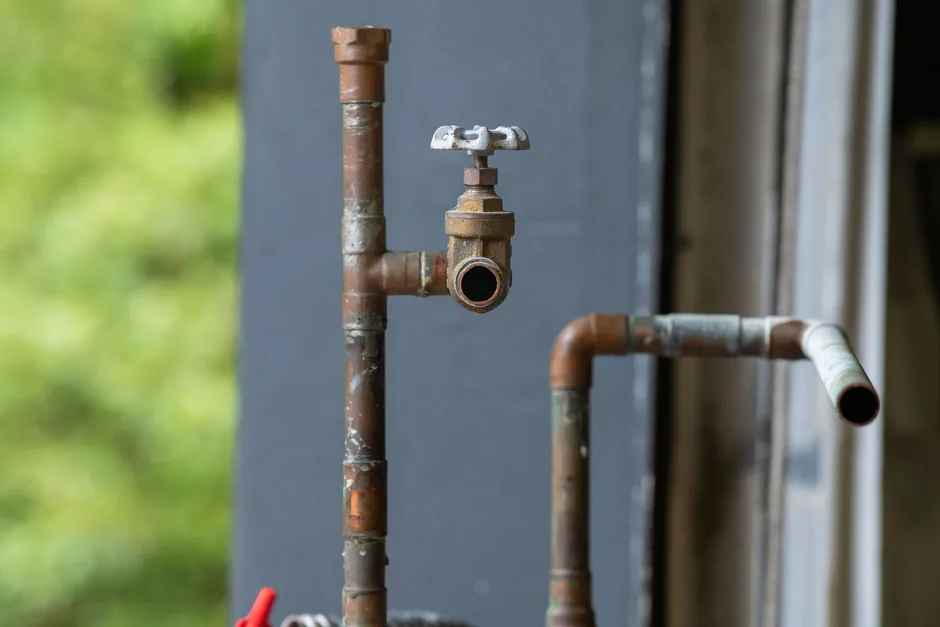
Look at the pipework coming off the top or side of your hot water unit. The tempering valve is usually a small brass body with three pipe connections: very hot water in from the tank, cold water in, and mixed water out toward the bathrooms. It often has an adjusting screw under a cap or a small lever, and sometimes a stamped temperature.
Do not touch the screw. It is the setting that stops the bathroom running at tank temperature. Just note where it is, take a photo of it and any markings, and move on.
3. Feel the pipes either side of it, carefully
With the unit on and at temperature, touch the pipe leaving the tank with the back of your fingers for a moment. It should be too hot to hold. Then touch the pipe leaving the valve toward the bathrooms. It should be hot but bearable. If the pipe leaving the valve is nearly as hot as the one from the tank, the valve is passing too much hot water. If it is lukewarm while the tank pipe is blistering, the valve is passing too much cold or has partly seized.
This is a two-second check, not a diagnosis, and you should never hold a hand on the tank-side pipe or the relief valve line. A plumber confirms it with a thermometer and the manufacturer figures, but the feel test tells you which way it is failing.
4. Measure what is actually coming out of the bathroom tap
Run the bathroom basin hot for two minutes, fill a cup and put a kitchen or cooking thermometer in it. The NSW rule for bathroom outlets is no more than 50 degrees. A reading that is noticeably cool with the unit on and the tank hot suggests the valve is letting in too much cold, and anything over 50 is above the NSW limit and worth acting on today.
Write the reading down with the time of day. If you are on a cheap overnight tariff, a tank that has run through the evening is a different story, and the off-peak hot water guide explains why the same unit can give you hot water at 7am and lukewarm at 8pm without any fault at all.
5. Rule out the other causes before blaming the valve
A failing tempering valve gets blamed for plenty it did not do. Lukewarm water that runs out quickly is more often a dead element or a tripped thermostat, and a tank that is cold all day may simply be on a restricted tariff. Run through the checks in the no hot water guide first, particularly whether the unit has power and whether it is a controlled-load timing issue.
If water is dripping from a valve or the tank, that is a separate job. Read hot water system leaking to tell a relief valve doing its job from a failed part, because a tempering valve can weep from its unions too.
6. Protect the household while you wait
If any bathroom reading was over 50, or the water changes from cold to scalding without warning, turn the unit off at the switch or gas control and stop using hot water in the bathrooms until it is looked at. Tell everyone in the house, and keep young children and older people away from the hot tap. You can wash with kettle water mixed down in a basin in the meantime.
If the problem is lukewarm rather than scalding, there is no safety rush. Leave the unit on, put up with a cooler shower and book a visit.
Bathroom water too hot or too cold?
A licensed Parramatta plumber can test the valve and the unit, 24/7.
7. Book a licensed plumber to test and replace it
Replacing or repairing a tempering valve is licensed work in NSW, and the owner and occupier exemption names it as an exclusion. A plumber will confirm the fault with a thermometer, check the unit and the strainers either side, fit a compliant valve, and set the delivery temperature so it is correct at the outlet, not just on the valve.
Ask for the licence number on the quote. Ours is 368473C.
8. What a tempering valve does, and why NSW wants one
Your hot water unit has to store water hot. The plumbing code leans on 60 degrees in the tank to keep legionella from growing, but water that hot would scald at a basin. The tempering valve sits between the two and blends a measured amount of cold into the hot, so the bathroom gets the safer temperature while the tank stays hot enough to stay clean.
In NSW the limit is written into the Plumbing Code of Australia (NCC 2022 Volume Three, NSW Part B2). Heated water delivered to fixtures used for personal hygiene, meaning showers, baths, basins and bidets, can be no more than 50 degrees. A tempering valve is one of the acceptable devices for that. A thermostatic mixing valve, a thermostatically controlled tap, or a heater with a 50 degree limit marked on it also qualify.
The rule bites when you change the system. The NSW Building Commission note on temperature requirements (updated 29 September 2026) says a device is required when you first install a heater, or replace one like for like or with a different model, or reposition it. It is not required just for replacing an element or thermostat, or a single basin tap where no device exists. So a new tank on an old bathroom needs a valve even if the old tank never had one.
9. Why Parramatta valves fail the way they do
The rules above are the same across NSW. What changes around here is what is likely to be wrong, and who has to deal with it.
Soft water means the usual story is not limescale. A Queensland plumbing site will tell you tempering valves clog with mineral deposits, and in a hard water area that is fair. Sydney Water's Prospect East quarterly report for April to June 2026, the system that serves central Parramatta, gave a 12-month average hardness of 52.5 mg/L, under the 60 mg/L line Sydney Water uses to call water soft. Here a valve more often fails from age, a seized thermal element, or debris blocking the fine strainers inside it. The tap water hardness guide has the figures.
Old pipe supplies the debris. Plenty of homes in Harris Park, North Parramatta and Granville still carry galvanised steel pipework, which rusts from the inside out. Flakes and sediment are exactly what blocks a valve's mesh, so a bathroom that has gone weak on the hot side after plumbing work or a main repair is worth checking at the valve before assuming the mixer is gone. The burst pipe guide covers why that older pipe moves and cracks in the first place.
Heritage streets and the unit itself. City of Parramatta's heritage controls for North Parramatta and Sorrell Street, South Parramatta, Harris Park West, Elizabeth Farm and Tottenham Street say hot water systems should not be visible from the street or a public place. That matters if a failing valve is the last straw on a twenty-year-old tank and you are choosing where a new one goes. Check the rules for your street before you pick a spot. The heritage home plumbing guide covers it.
Apartments: whose heater is it? In the CBD, Harris Park and Westmead apartment belt, a valve belongs to whoever owns the heater it serves. The NSW common property memorandum puts a hot water system serving a single lot as lot property and one outside the lot or serving more than one lot as owners corporation property. A heater in your laundry cupboard that serves only your unit is on your side; a central plant is the building's. Check your by-laws before you call, and see strata plumbing: who pays.
The 45 degree rule is not for your house. The stricter 45 degree limit in NSW applies to residential parts of aged care buildings, patient care areas of health-care buildings, areas used by children in early childhood centres and schools, and facilities for people with a disability. That is why Westmead's hospital precinct is built to a different standard from a Granville cottage. Your bathroom is 50.
10. Five things that make it worse
- Winding the adjusting screw to "fix" it. Turn it up and the shower scalds. Turn it down and it may drop below the temperature that keeps the tank safe from legionella. The setting is part of a compliant installation.
- Leaving a scalding bathroom in use. Hot water at tank temperature can scald. Do not wait for a convenient weekend.
- Replacing it with a valve that is not rated for your system. The valve has to suit the pressure, the flow and the heater type. A cheap online part that is the wrong rating can leave you with the same problem and no compliance.
- Turning the tank thermostat down to cool the water. A tank kept lukewarm to avoid scalding is what the valve exists to make unnecessary. Stored water below the safe range is the legionella problem you were trying not to have.
- Treating a drip as a nuisance. A weeping union at the valve gets worse, and if it ends in an unattended leak onto a laundry floor in a unit, it ends in a strata insurance conversation.
11. When it is an emergency, and when it can wait
Call straight away, any hour, if bathroom water is scalding, if the temperature swings from cold to dangerously hot with no warning, or if the valve is gushing and you cannot isolate the unit. Switch the unit off first. A scald is the one thing here that cannot be undone.
It can wait for a booked visit if the water is merely lukewarm or runs a little cooler than it used to, the reading at the bathroom basin is under 50, and nothing is leaking. Honestly, if the bathroom is just tepid and the kitchen is hot, check the element and the tariff before paying for a valve you may not need.
- A tempering valve keeps NSW bathroom outlets at 50 degrees or under while the tank stays hot. The kitchen and laundry are normally not on it.
- Compare bathroom and kitchen, feel the pipes either side, and measure the basin water before you decide it is the valve.
- Never wind the adjusting screw. Repairing a tempering valve is licensed work under the Plumbing and Drainage Act 2011.
- In Parramatta's soft water, failure is more likely age, a seized part or debris than limescale, and a new unit always needs a valve.
- Scalding water means the unit goes off and the call is made today. Ask for the licence number, ours is 368473C.
Tempering valve FAQs
Is a tempering valve the same as a thermostatic mixing valve?
No, though both are accepted in NSW. A tempering valve blends hot and cold to a set temperature and does not react to changes in supply. A thermostatic mixing valve senses the outlet temperature and corrects itself, and the NSW plumbing code requires that kind, or a thermostatically controlled tap, for the stricter 45 degree places such as patient care areas, schools and early childhood centres. Houses and units in Parramatta are on the 50 degree limit, where a tempering valve is allowed.
Why is my kitchen tap hotter than the shower?
Because the NSW 50 degree limit applies to fixtures used for personal hygiene, like showers, baths and basins. The tempering valve feeds those. The kitchen sink and laundry are normally on full-strength hot water straight from the unit, which is usually around 60 degrees, so it is the system doing its job.
Can I adjust or replace my tempering valve myself?
No. Section 4(5)(e) of the Plumbing and Drainage Act 2011 lets an owner or occupier repair a tap or showerhead without a licence, but names a thermostatic mixing valve, tempering valve or backflow prevention device as outside that exemption. It is licensed work, and the setting protects whoever is in your shower.
Do I need a new tempering valve if I replace my hot water unit in Parramatta?
Almost always. The NSW Building Commission note says a temperature control device is required when a heater is replaced, whether like for like or a different model. Replacing only an element or thermostat on the existing set-up does not trigger the requirement. In a building with a bank of several heaters, replacing some but not all of them is also exempt.
Does hard water kill tempering valves in Sydney?
Not usually. Hard water is the common cause in other parts of Australia, but Sydney water is soft. Sydney Water's Prospect East report, which covers central Parramatta, showed a 12-month average hardness of 52.5 mg/L for April to June 2026, under the 60 mg/L soft-water line. Failures here are more likely age, a seized part or debris in the strainers.
Who looks after the valve in my Parramatta apartment?
It depends on whose heater it serves. The NSW common property memorandum treats a hot water system that serves a single lot as the lot owner's, and one outside the lot or serving more than one lot as the owners corporation's. Check your by-laws first, because a unit heater is yours but a central plant is the building's.