Short version first: as of 22 October 2026 Sydney is not under drought water restrictions. That does not mean there are no rules. Sydney Water's Water Wise Guidelines are mandatory every day of the year across Sydney, the Blue Mountains and the Illawarra, they carry an on-the-spot fine, and a hot Parramatta afternoon is exactly when they are easiest to break without noticing.
This guide covers what the rules actually say, what you can still do any time, and the plumbing that keeps you on the right side of them. A lot of it comes back to the water you lose without noticing: a hose left on, a sprinkler hitting the driveway, a tap that drips into the garden bed. If a leak is the real problem, our leak detection and burst pipe team can find it.
No elevated restrictions are in place, but the Water Wise Guidelines apply every day: water the garden before 10am or after 4pm with a trigger-nozzle hose, sprinkler or watering system, run drip or smart systems any time, never hose paths or driveways, never leave a hose or tap running, and fix a leak by any deadline Sydney Water sets. The fine is $220 for an individual and $550 for a corporation. Rainwater, greywater and bore water are exempt, as long as the tank is not topped up from the mains.
- Check Sydney Water's page for what is in force today
- Water before 10am or after 4pm, or switch to drip
- Fit a trigger nozzle to every hose you water with
- Keep water off paths and driveways
- Never leave a hose running, and fix leaks fast
- Move outdoor watering onto rainwater or greywater
On this page
- Check what is in force today
- Water outside 10am to 4pm
- Fit a trigger nozzle
- Keep water off hard surfaces
- Never leave it running, fix leaks
- Use rainwater and greywater properly
- Why the rules bite harder in Parramatta
- Five things that get people fined
- When it is urgent and when it can wait
- If restrictions come back
1. Check what is actually in force today
Look up Sydney Water's Water Wise Guidelines page before you rely on what a neighbour remembers. The rules in force right now are the ones on that page, and as of today it says elevated water restrictions are not in place, while the guidelines themselves are mandatory every day, year round.
That distinction trips a lot of people up. The guidelines took effect on 2 December 2020 by a notice in the NSW Government Gazette, replacing the earlier restrictions notice, and they "remain in force until further notice". They are not a drought measure that switches off when the dams fill. They apply to everyone using drinking water from Sydney Water's network, which covers every house, unit block and business in Parramatta, Westmead, Harris Park, Granville and the rest of the City of Parramatta.
About 80% of Sydney's drinking water comes from Warragamba Dam, and the current storage levels sit on WaterNSW's site. If a dry run ever pushes the government to bring in elevated restrictions, Sydney Water's page is where the change shows first.
They only govern drinking water from the mains. Recycled water from purple pipes, rainwater from a tank that is not topped up with mains water, greywater, and bore water are all outside them. Bore and river water have their own government rules, but Sydney Water's hours and hose rules do not apply.
2. Move garden watering outside 10am to 4pm, or switch to drip
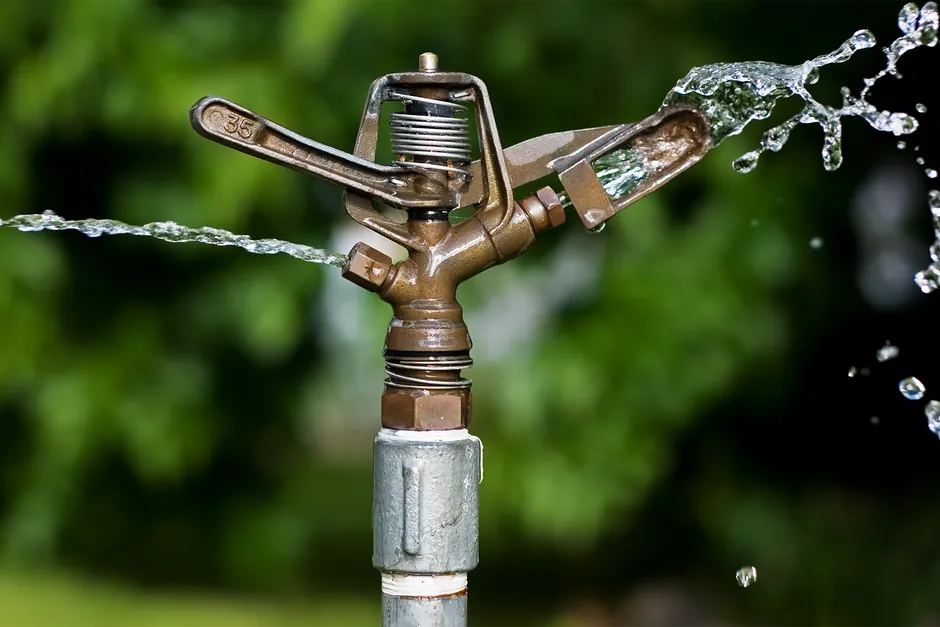
Water the garden and lawn before 10am or after 4pm if you are using mains water. In those hours you can use any of three methods: a hand-held hose with an instant on-off mechanism such as a trigger nozzle, a sprinkler, or a watering system.
Between 10am and 4pm only two kinds of system are allowed: smart watering systems and drip irrigation. A drip line under the mulch is legal at 1pm on a Tuesday; a pop-up sprinkler on the same timer is not. If your irrigation controller was set up years ago, go and check its start times now, because a controller that kicks off at 11am is breaking the rules every day it runs, whether anyone is home or not.
There is one exception worth knowing if you are renovating. For 28 days after new turf is laid or a new garden is planted, you can water any time, following the supplier's or installer's care instructions. The no-runoff rule still applies.
In Parramatta the morning slot is the one to use. By mid-morning in summer the heat is already pulling water out of the top of the soil, which is the logic of a 10am cut-off. More on just how much hotter it gets out here in section 7.
3. Put a trigger nozzle on every hose you water with
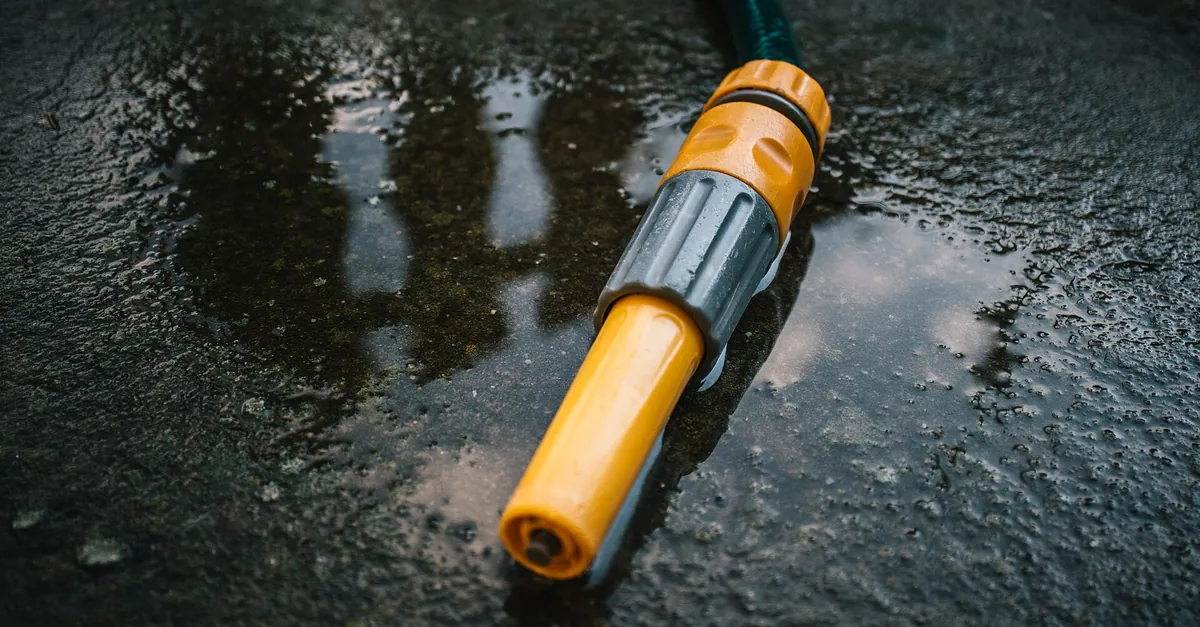
Fit a nozzle that shuts the water off the moment you let go to any hose you use on the garden, the car or the house. An open-ended hose is not one of the permitted watering methods at any hour, and nearly every any-time use in the guidelines that involves a hose requires a trigger nozzle.
With one fitted, quite a lot is allowed any time of day:
- Washing the car or the boat, with a trigger-nozzle hose, a bucket and sponge, a high-pressure cleaner, or at a commercial car wash.
- Washing the house: windows, walls, gutters and the roof, with a trigger-nozzle hose or a high-pressure cleaner.
- Cooling people or animals, and animal husbandry.
- Topping up a pool or spa to replace water lost through evaporation or normal use, or filling a new or renovated pool, as long as you do not fill it to the point of overflowing.
A trigger nozzle is the cheapest compliance fix in this guide, and it is the one that matters most if the rules ever tighten.
4. Keep water off paths, driveways and paving
Stop hosing down the driveway, and set sprinklers so they do not reach the paving. Cleaning paths, driveways, concrete or other paved areas with water is not permitted, and neither is runoff or overspray from watering onto hard surfaces like pathways.
The exceptions are narrow. You can wash a hard surface when it is genuinely needed for safety, health or an emergency, for construction work including resurfacing, or because the surface is contaminated, and even then the hose needs a trigger nozzle unless it is feeding a high-pressure cleaner. Leaves on the driveway do not count. Use a broom.
Overspray is the one that catches people in Parramatta, for a reason that has to do with the ground. Much of the area sits on clay soils weathered from Wianamatta shale, and Sydney Water's own irrigation advice is that heavy clay soils often cannot absorb water quickly, so the watering rate needs to be slow. Put a high-output sprinkler on a clay lawn and the water sits on top, then runs across the path and down the gutter. That runoff is both a breach and wasted water. Shorter, slower cycles soak in; long blasts run off.
5. Never leave a hose or tap running, and fix leaks fast
Turn the tap off at the wall every time you put the hose down. Hoses and taps must never be left running unattended, and a hose with a trigger nozzle left on at the tap is a leak waiting for the fitting to let go.
Leaks have their own rule. If Sydney Water gives you a notice to fix a leak, you must fix it by the deadline in the notice, and water escaping after that date is a breach in its own right. Most leaks never get that far, because the person paying the bill notices first. Sydney Water's test takes an hour: turn off every tap and water-using appliance, note the numbers on the meter, use nothing for an hour, then check again. If the numbers have moved, water is going somewhere. On most Parramatta properties the meter is at the front, close to the street.
Two quick checks before you call anyone. Disconnect any hose or irrigation line that lives permanently on a garden tap and see whether the tap itself is dripping, and look for a patch of lawn that stays greener than the rest, which can mean a pipe leaking underground. Our guide on why a water bill jumps walks through the meter test in detail.
On who fixes what: the owner is responsible for the pipes and fittings on the property, although Sydney Water often repairs the service between its main and the meter, up to a metre inside the boundary, at no charge. The meter belongs to Sydney Water. A leak at the meter tap is the owner's responsibility, but Sydney Water will fix it free within 10 working days if you call 13 20 90, or within three hours for $99 through its express service. Legally, the only plumbing you can do yourself is minor work like changing a tap washer. Anything behind the wall or in the ground is a job for a licensed plumber.
Meter moving with every tap off?
That is a hidden leak. A licensed Parramatta plumber can trace it and fix it.
6. Move outdoor watering onto rainwater or greywater, plumbed properly
Run the garden off a rainwater tank or greywater if you can, because neither is covered by the guidelines. You can water with tank water at noon, with a sprinkler, all summer. There is one condition that catches people out: the exemption does not apply where the tank has also been supplied from Sydney Water's drinking water system. Top the tank up from the mains and its water is treated as mains water.
Rainwater tanks. Sydney Water says a properly installed and plumbed tank could save up to 40% of a home's drinking water, which it puts at around $200 a year. A tank of up to 10,000 litres does not normally need council approval, but there are conditions under the state's exempt development rules, and Sydney Water says to check with council for local requirements. A full tank is heavy, a tonne for every 1,000 litres, so it needs a proper base, and it cannot sit over a Sydney Water main. Below-ground tanks need extra backflow protection.
Where the plumbing comes in: if the tank feeds a toilet, washing machine or hot water system, or is topped up by or switches over to mains water when it runs dry, your plumber has to book and pay for a NSW Fair Trading inspection, and you should get a Certificate of Compliance at the end. Sydney Water recommends a licensed plumber experienced with tanks for the connection. Sydney Water's advice is to connect the tank to at least one regularly used fixture inside, like a toilet or washing machine, to get the most value from it, because that water gets used every day, not just when the garden is dry. If you want the tank to feed the hot water system too, raise it before the install, not after.
Greywater. The simplest version is a bucket from the shower or the washing machine, which needs no permission. Do not store it for more than a day, and do not put it on the garden when it is raining or the soil is already saturated, so it does not run into the neighbour's yard. A diversion device sends greywater straight to subsurface irrigation; NSW Health keeps a register of accredited devices. A treatment system can store it and reuse it for toilets and the laundry. Anything permanent is licensed plumbing.
7. Why the rules bite harder in Parramatta
The guidelines are the same from Bondi to Penrith. What they mean for your garden is not, and Parramatta sits at the hard end.
It is much hotter here than in the city. The Bureau of Meteorology's Parramatta North station at Masons Drive averages 44.6 days a year at 30 degrees or more, against 15.2 at Observatory Hill in the city. Days of 35 degrees or more: 11.2 a year in Parramatta, 3.2 in the city. The January average maximum is 28.6 degrees against 26.0, and the station has recorded 47.0. Parramatta also gets less rain, about 982 mm a year against 1,213 mm at Observatory Hill. More hot days and less rain means gardens here need more water, more often, so the 10am cut-off is the rule that actually changes how you garden.
The clay changes how you should water. Clay soils weathered from Wianamatta shale are reactive: they swell when they get wet and shrink as they dry out. That is the same movement that works old pipe joints apart across the area. For the garden it means two things. Water soaks in slowly, so sprinklers run off onto paths unless you cut the cycle short. And the soil next to the house is part of what the slab or footings sit on, so a long-running leak, a dripping garden tap against the wall, or a tank overflow dumping onto one corner of the house is worth fixing quickly for reasons beyond the bill.
Heritage areas have a rule about where a tank goes. In the North Parramatta and Sorrell Street, South Parramatta, Harris Park West, Elizabeth Farm and Tottenham Street conservation areas, the City of Parramatta's development control plan says rainwater tanks, along with hot water systems, air conditioners and solar panels, should not be visible from the streetscape or a public place. A tank down the side or behind the house is the answer; one on the front verandah is not. Our guide to plumbing a heritage home covers what else council looks at.
Apartment gardens are on the clock too. If your building in the CBD or Westmead high-rise belt waters its common gardens on an automatic controller, the guidelines apply to it the same way they apply to a house in Northmead, because they cover every user of drinking water. If you are on a strata committee, ask whoever looks after the gardens what the start times are and whether the heads hit the paving.
8. Five things that get people fined, or waste the most water
- An irrigation timer nobody has looked at in years. Controllers get reprogrammed after a blackout, a new tap or a garden makeover, and nobody checks the start times again. Any sprinkler or pop-up system running between 10am and 4pm on mains water is a breach.
- Hosing the driveway "because it was quicker". Leaves and dust are not a safety, health or contamination reason. A broom is the legal option.
- A tank topped up from the mains. The day mains water goes into the tank, the exemption goes with it. If you want a mains backup, it is a plumbing job, and it needs the Fair Trading inspection.
- Leaving the hose pressurised at the tap. A trigger nozzle holds the water back only until a fitting or the hose itself gives way. Turn it off at the tap.
- Ignoring a running toilet or a dripping tap. Neither is against the guidelines on its own, but Sydney Water says a constantly running toilet can lose thousands of litres a day, which dwarfs any garden. Our guide to what a running toilet costs puts a number on it.
9. When it is urgent, and when it can wait
Water running down the street, gushing from the footpath or bubbling up through the nature strip is a leak in a public space, and Sydney Water asks you to report it so it can fix it. If it is urgent, or it is between 11pm and 6am, call Sydney Water on 13 20 90, which is staffed around the clock.
On your side of the boundary, it is urgent if water is coming up through the ground or a wall, the meter is spinning with everything off, or you cannot turn the water off at all. Shut the main at the meter and call a plumber. It is also time-critical if you have a leak notice from Sydney Water, because the deadline in the notice is what the fine hangs on.
It can wait for a booked visit if it is a dripping garden tap, a leaking hose fitting, or a sprinkler head throwing water the wrong way. Fix the cheap bits yourself: a new hose fitting or a tap washer is allowed. If the drip is from the tap body or the pipe behind it, that is licensed work, but it is not an after-hours job.
10. If restrictions come back
Sydney Water describes the guidelines as designed to protect drinking water supply and to help prepare for elevated restrictions when they are needed, especially in drought. If they come back, the rules tighten on mains water only. Rainwater, greywater, bore water and recycled water are outside the guidelines now, which is why it pays to have them set up before a dry year rather than during one.
The practical point: anything you set up while water is plentiful keeps working when it is not. A tank plumbed into the toilets and the garden, drip lines on a timer that respects the hours, trigger nozzles on every hose, and a meter that does not move overnight are the things that make tighter rules a non-event. When the 2020 notice replaced the earlier restrictions, every exemption permit issued under the old rules was revoked except those for medical reasons, so do not count on a permit carrying over.
- No elevated restrictions are in place today, but the Water Wise Guidelines are mandatory every day across Sydney Water's area.
- Mains water on the garden before 10am or after 4pm only, with a trigger-nozzle hose, sprinkler or watering system; drip and smart systems any time.
- No hosing of hard surfaces, no runoff, no unattended hoses, and fix any leak by Sydney Water's deadline. Fines are $220 and $550.
- Parramatta gets nearly three times as many 30 degree days as the city, and its clay soaks water in slowly, so short, early watering matters more here.
- Rainwater and greywater are exempt, unless the tank is topped up from the mains. Tank plumbing to toilets, laundry or hot water needs a licensed plumber and an inspection.
Water restriction FAQs
Can I water my garden in Parramatta in the middle of a hot day?
Only with drip irrigation, a smart watering system, rainwater from a tank that is not topped up from the mains, or greywater. A hose, sprinkler or ordinary watering system on mains water has to wait until after 4pm. Parramatta North averages 44.6 days a year at 30 degrees or more, so on most of those days the best time to water is before 10am, when less of it evaporates.
Can I put a rainwater tank on my heritage cottage in Harris Park?
Usually yes, but not where it can be seen from the street. In the Harris Park West conservation area, and in North Parramatta and Sorrell Street, South Parramatta, Elizabeth Farm and Tottenham Street, the City of Parramatta DCP says rainwater tanks should not be visible from the streetscape or a public place. Put it down the side or at the rear. A tank of up to 10,000 litres does not normally need council approval, but check with council if the house is individually listed.
Do the rules apply to the gardens in our apartment building?
Yes. The guidelines apply to every user of drinking water in Sydney Water's area, so a common-property irrigation system in a CBD or Westmead tower has the same limits as a house: sprinklers and ordinary watering systems only before 10am or after 4pm, drip and smart systems any time, and no overspray onto paths. Whoever looks after the controller should check its start times.
If I top up my rainwater tank from the mains, can I still use it any time?
No. The exemption for rainwater does not apply where the tank has also been supplied from Sydney Water's drinking water system, so a tank with mains water in it is under the same hours and hose rules as a tap. A mains top-up also has to be installed by a licensed plumber and inspected by NSW Fair Trading.
What is the fine for breaking the water rules in Sydney?
The penalty notice amount set in the 2020 gazette notice is $220 for an individual and $550 for a corporation. Sydney Water also takes anonymous reports of deliberate water misuse and says it will investigate.
Who fixes a leak at the water meter out the front?
The meter belongs to Sydney Water, but a leak at the meter tap is the owner's responsibility. Call Sydney Water on 13 20 90 and it will fix the meter tap free within 10 working days, or within three hours for $99 through its express service. You can also pay a licensed plumber to do it sooner. Leaks past the meter, on your side, are yours to fix.